GovTech retrenches 93 staff amid shift to two-year restructuring plan
GovTech has retrenched 93 officers in the first phase of a restructuring that will affect 7 to 9 per cent of its workforce over two years, as the agency moves from vendor-delivered projects to in-house product ownership.
- GovTech retrenched 93 officers in restructuring's first phase, affecting 305 roles.
- Agency shifts from vendor-delivered projects to in-house product ownership over two years.
- Retrenched staff receive enhanced pay-outs; two more restructuring phases planned by 2028.

The Government Technology Agency (GovTech) has retrenched 93 officers as it completed the first phase of a restructuring exercise that will affect 7 to 9 per cent of its workforce over the next two years.
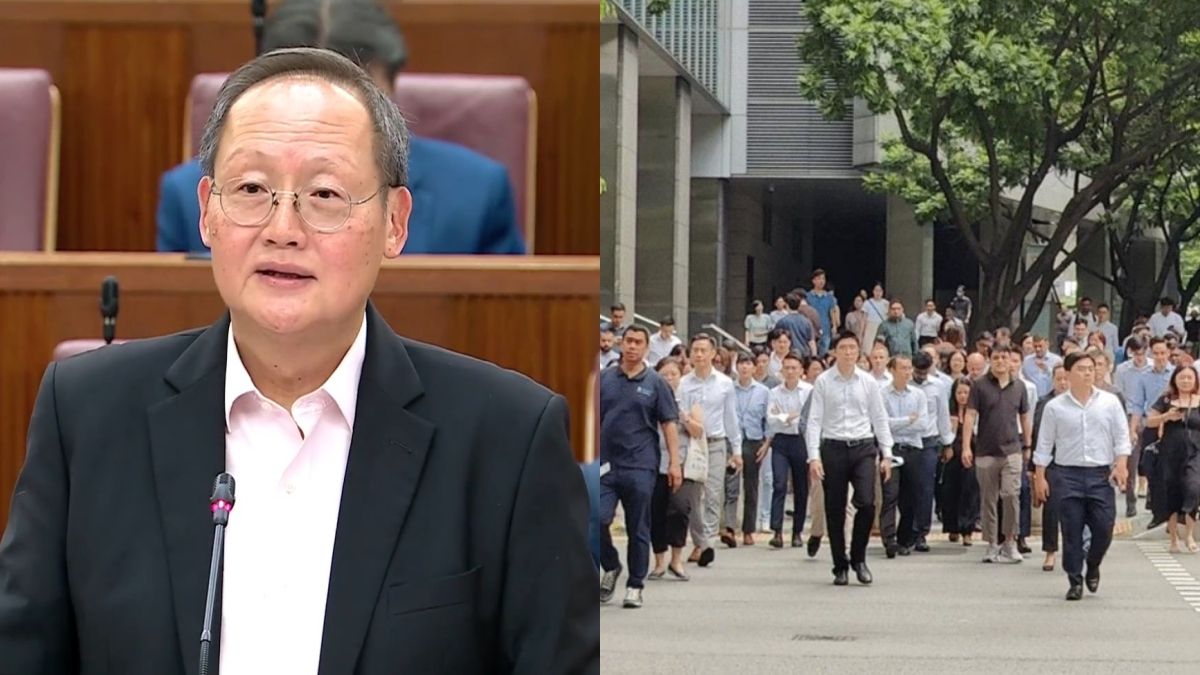
GovTech chairman Chng Kai Fong said the changes were intended to shift the agency from managing projects delivered by vendors to running products itself, enabling it to respond more quickly to national needs.
"This is not an AI-driven downsizing exercise. This shift began years before the current AI wave," Chng said in a note sent to about 3,900 staff on Wednesday, 15 July, 2026, which was also sent to the media.
He said GovTech expected to employ more people by the end of the transition than it does today. "GovTech is changing shape, not shrinking," he said.
GovTech, a statutory board under the Ministry of Digital Development and Information, was founded in 2016 with about 1,800 staff and now supports the technology needs of more than 50 government agencies.
In a statement on 15 July, 2026, GovTech said more than two-thirds of the officers identified in the first phase had been retained in their current roles or would be retrained into new ones.
Of the 305 officers identified in this phase, 102 were retained, 110 were placed into apprenticeships to reskill, and the remaining 93 were retrenched.
The first phase covered six of GovTech's forward-deployed teams, which are units embedded in other government agencies, along with one central function. Chng did not specify which teams or function were affected.
Staff in project-delivery and vendor-management roles were among those affected. Two further phases will cover the rest of GovTech's forward-deployed teams, with the scope of the next phase to be announced by November 2026.
Retrenched staff will receive one month's salary for every year of service, capped at 25 years, along with a three-month ex-gratia payment and salary and benefits through a six-week handover and notice period.
Those asked to remain to complete handovers or operate critical systems will receive an additional payment. Chng said the terms were agreed in consultation with the Amalgamated Union of Statutory Board Employees (AUSBE).
AUSBE general secretary Gabriel Ng said the union was informed of the plans early and had worked with GovTech to identify alternatives to retrenchment, including retraining, apprenticeships and redeployment.
He said the union had negotiated an enhanced package for exiting officers, including a pro-rated performance bonus and six months of paid union membership for members, on top of the standard terms.
Career coaches from NTUC's Employment and Employability Institute have been made available on-site, with close to 30 companies offering more than 300 technology-related vacancies. Affected officers have also been invited to a curated tech career fair on 4 August, 2026.
In a Facebook post, National Trades Union Congress (NTUC) deputy secretary-general Desmond Choo said workforce restructuring and retrenchment are "always difficult for affected workers and their families" and that "they should never have to go through it alone."
Choo, who is also Minister of State for Defence, said NTUC was committed to "journeying with members and workers through every stage of their careers, especially during periods of sudden change and uncertainty," adding that its unions' focus was to help workers find jobs and ensure a "fair and just transition."
He said GovTech's early engagement with AUSBE "made a meaningful difference," allowing the two parties to jointly identify alternatives to retrenchment, including retraining, apprenticeship and redeployment opportunities, which reduced the impact on officers.
For those exiting the agency, Choo said AUSBE had negotiated enhancements to the support package beyond what the collective agreement provided, including financial support and career transition assistance. He added that career coaches had been made available and that e2i, NTUC's Employment and Employability Institute, had curated a tech career fair for affected officers.
"We are committed to helping the affected GovTech workers for as long as they take to land another opportunity," he said.
Choo said that when employers engage unions early, workers' concerns can be better addressed and support can be provided in a timely manner to facilitate smoother transitions. He encouraged professionals, managers and executives, as well as public officers more broadly, to seek out NTUC's resources and its affiliated unions to support their career journeys.
A Ministry of Manpower spokesperson said GovTech's retrenchment package exceeds what is recommended under the Tripartite Advisory on Managing Excess Manpower and Responsible Retrenchment.
Large-scale public service retrenchment exercises are rare in Singapore. The last publicly reported case dates to 2006–2010, when 20 civil servants left under the Special Resignation Scheme, according to a parliamentary reply given by then-Deputy Prime Minister Teo Chee Hean in November 2011.
Explaining the rationale for the changes, Chng said critical government systems increasingly required in-house capabilities so the agency could adapt quickly to national needs.
"Left unchanged, our legacy systems become harder to secure, harder to change and more vulnerable to failure," he said, citing services such as Singpass, Parents Gateway and CDC vouchers that require continuous building and improvement rather than one-off delivery.
"Vendors will remain important partners, but accountability for our core systems now sits with us," he added.
GovTech chief executive Goh Wei Boon said the agency needed to strengthen its ability to build, run and continuously improve the products it owns, as digital services grow in scale and complexity.
Chng said leadership had considered stretching the transition over a longer period and relying mainly on natural attrition, but decided against it, citing the widening gap between what Singaporeans need and what the current model could deliver.
The scope of the next restructuring phase will be announced by November 2026, with affected staff informed directly before any public announcement.