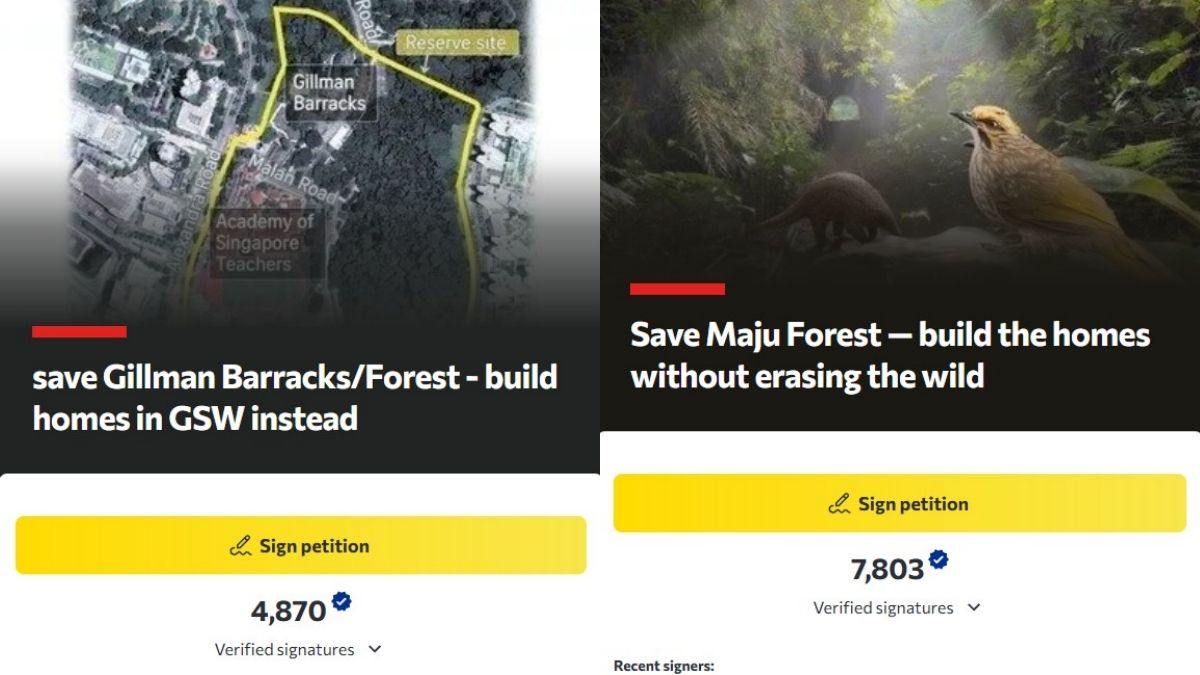
Online petitions opposing Gillman and Maju Forest housing plans surpass 20,900 endorsements
Online petitions opposing proposed housing developments at Gillman Barracks and Maju Forest have attracted more than 20,900 endorsements, as supporters urge the Government to better balance housing needs with environmental and heritage conservation before the public consultation closes.
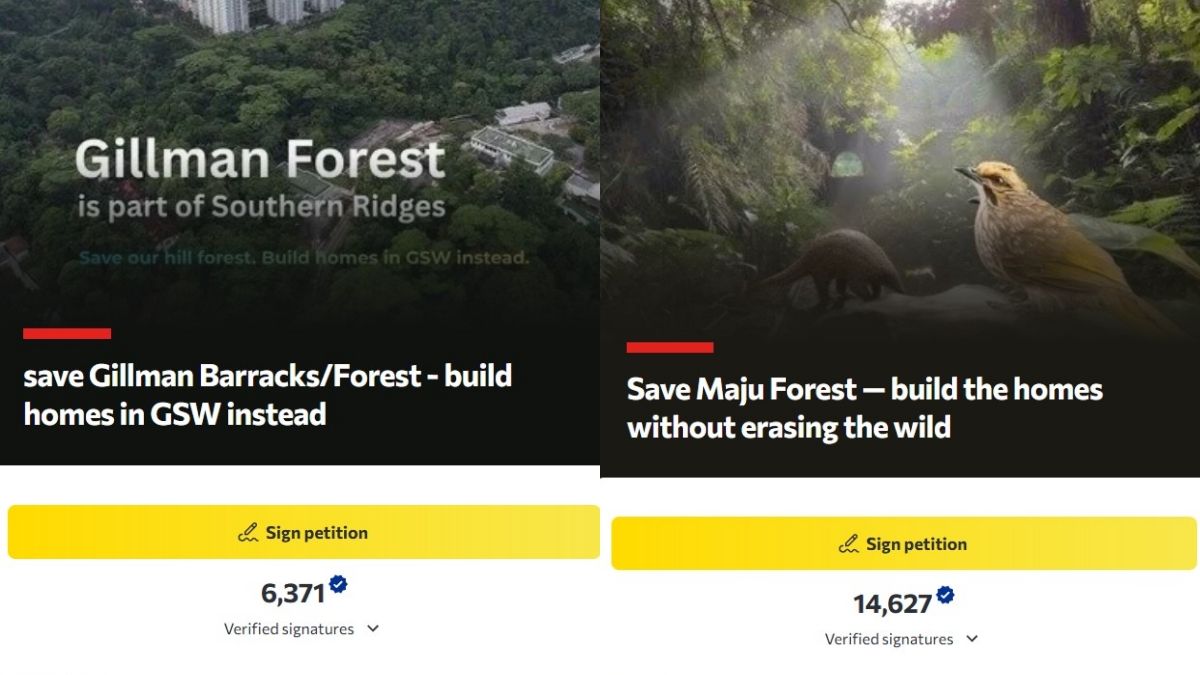
- Online petitions opposing the Gillman Barracks and Maju Forest housing plans have attracted more than 20,900 endorsements.
- Campaigners are urging residents to submit formal feedback before 6 August 2026, alongside signing the petitions.
- HDB said environmental and heritage studies informed the proposals and that public feedback will help shape the final plans.

Online campaigns opposing proposed housing developments at Gillman Barracks and Maju Forest have continued to gather momentum, with the combined number of endorsements exceeding 20,900 as public debate over balancing housing needs with environmental conservation intensifies.
As of 9.00am on 16 July 2026, the "Save Gillman Barracks/Forest" petition had attracted more than 6,300 signatures.
A separate petition, "Save Maju Forest — build the homes without erasing the wild", launched on 11 July 2026, had gathered more than 14,600 signatures within five days.
The campaigns gained traction following the Housing and Development Board's (HDB) announcement on 10 July that it intends to develop new homes at Gillman Barracks and the Sunset Way site in Clementi.
Both petitions argue that expanding Singapore's housing supply should not come at the expense of remaining forests, biodiversity and historically significant community spaces.
Supporters have called on the Government to pursue solutions that address housing demand while safeguarding environmentally and culturally important areas for future generations.
Petition organiser urges residents to submit formal feedback
Raymong Ong, who started the Save Maju Forest petition, encouraged supporters to continue participating in the public consultation process beyond signing the petition.
"Don't let your signature be the end of your voice. The official feedback window is open until 6 August 2026 and a letter to HDB and/or your MP is what truly counts. That's how Dover Forest's story changed and it's how ours can too," Ong said.
In an update after the petition surpassed 10,000 signatures, Ong said he was astonished by the level of public support the campaign had received in just a few days.
He reflected that the petition had begun as "one resident's quiet appeal" to draw attention to Maju Forest but had rapidly grown beyond his expectations, attracting tens of thousands of signatures.
Ong said support had come from "neighbours, students, retirees, birdwatchers, families" and many others, adding that the messages and photographs shared by supporters had deeply moved him.
Responding to suggestions that he take on a larger leadership role, Ong said he would "respectfully decline", explaining that the campaign had "outgrown its founder" and that this was "the best thing that could have happened to it".
Describing himself as "an ordinary resident", Ong said he would continue updating the petition, directing supporters to official feedback channels and assisting the wider community backing the campaign.
He also encouraged Sunset Way residents to participate in an engagement session scheduled for the evening of 17 July at Bukit Timah Community Club, beginning at 7.30pm.
Supporters question development priorities
Many online supporters backing the petitions argued that clearing mature forests would result in irreversible environmental losses.
Several commenters said Singapore's remaining natural habitats should be protected because "once it's gone, it's gone forever", arguing that newly planted trees cannot replace the biodiversity supported by established forests.
Others highlighted the ecological and social value of mature forests, saying they help reduce urban temperatures, provide habitats for wildlife and contribute positively to residents' mental wellbeing.
Some supporters also questioned the continued construction of new housing amid declining birth and marriage rates, arguing that land use priorities should be reassessed.
The petitions have become focal points for wider public discussions on how Singapore should balance future housing needs with environmental sustainability and heritage preservation.
Academic calls for greater transparency
On 14 July, Melissa Low, Head of the NUS Sustainability Academy and Research Fellow at the Centre for Nature-based Climate Solutions, called for greater transparency in how environmental and heritage considerations are balanced against housing requirements.
Writing in a commentary published by CNA, Low said the debate had developed into "a broader question" about how planning decisions involving green spaces and heritage sites are made and how members of the public are involved in those decisions.
After reviewing HDB's environmental and heritage studies, she acknowledged Singapore's progress in conducting environmental and heritage impact assessments.
Studies provide evidence but decision-making remains unclear
However, she questioned how the findings were ultimately weighed against housing needs, saying the published reports did not explain why the redevelopment proposal had been selected over possible alternatives.
Low also argued that public engagement should begin much earlier through community briefings and discussions instead of relying primarily on online feedback forms after proposals have been announced.
She warned that consultations perceived to take place only after major decisions have effectively been made risk becoming "an exercise in recording objections rather than shaping policy".
Low urged agencies to present alternative planning scenarios, explain the trade-offs involved and demonstrate how public feedback influences final planning decisions.
HDB outlines environmental safeguards
HDB has said the proposed developments at Gillman Barracks and Sunset Way were informed by detailed environmental and heritage studies.
The agency said findings from those studies, together with public feedback submitted by 6 August, would help shape the final development plans, including housing yield, flat mix, project classification and development timelines.
At Gillman Barracks, HDB plans to build public and private homes near the Greater Southern Waterfront while retaining more than 20 of the site's 86 heritage buildings.
The agency also intends to preserve most of the existing secondary forest, a natural forest stream and ecological corridors.
Environmental surveys identified 293 plant species and 178 fauna species at the site, including 33 species of conservation significance.
HDB said the proposal includes ecological corridors of at least 30 metres in width, around eight hectares of connected green space and phased vegetation clearance to minimise impacts on wildlife.
Four heritage clusters are also planned for retention and could be adapted for commercial and community uses.
For the 23-hectare Sunset Way site, HDB said the proposed estate would provide additional housing options in western Singapore while incorporating biophilic landscape design featuring native plant species.
Approximately eight hectares of land, including a natural freshwater stream and areas along the former Old Jurong Line, would be retained as wildlife habitat and connected to a proposed nature trail.