Metro Holdings to close Paragon and Causeway Point stores amid retail overhaul
Metro Holdings will exit its Paragon and Causeway Point department stores when leases expire, part of a wider strategic shift following two consecutive years of group losses.
- Metro to exit Paragon, Causeway Point stores when leases expire
- Group posted FY2026 losses linked to China property impairments
- China exposure cut from 50% in FY2016 to about 41% now

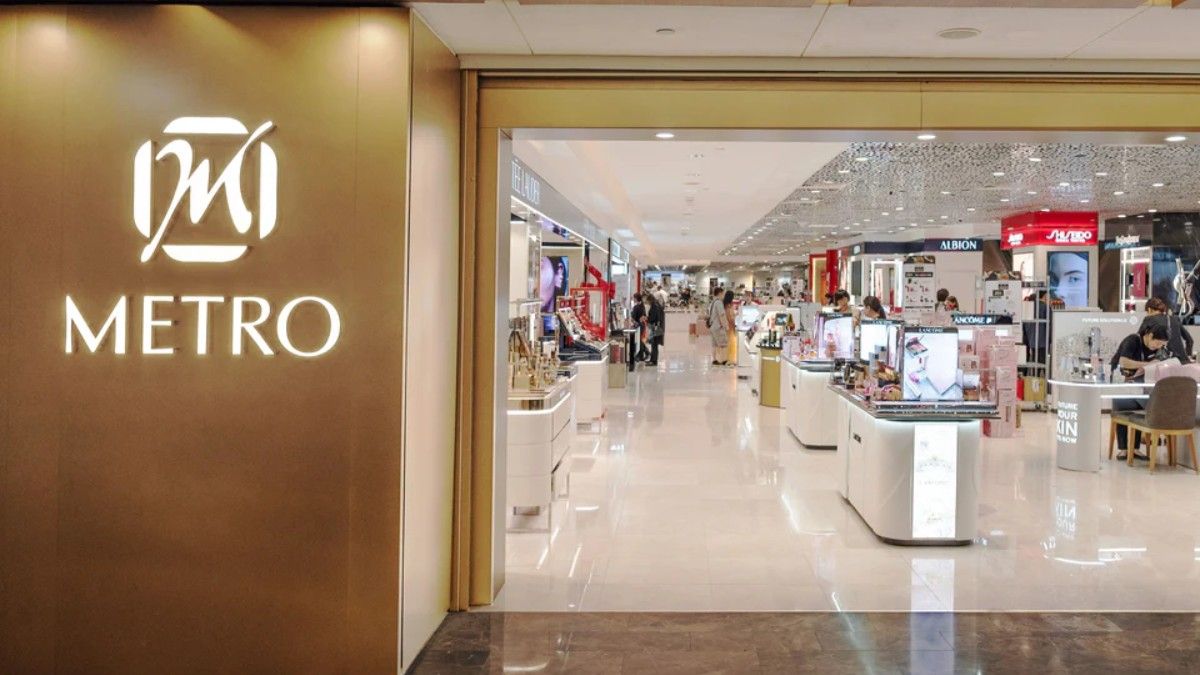
Metro Holdings Limited will stop operating its department stores at Paragon and Causeway Point once their current leases expire, as the mainboard-listed group presses ahead with a strategic repositioning of its retail business.
The decision was disclosed in a Singapore Exchange filing broadcast at 5.37pm on Monday, 20 July 2026, titled "Update on retail operations and retail strategy".
It follows a strategic review of the performance of the group's retail arm.
Metro said it intends to progressively transit from its traditional large-format department store model towards a more flexible retail approach, aimed at enhancing customer engagement, improving operational efficiency and supporting new retail opportunities.
The group is evaluating a range of alternative formats, including smaller-format stores, multi-speciality concept stores, curated retail experiences and pop-up store initiatives. It said it is in discussions with existing landlords, as well as other landlords, on rolling out the new multi-concept stores.
Management has commenced evaluating potential sites, considering factors such as location suitability, rental terms, financial viability, implementation timelines and other commercial and operational matters. No timeline has yet been confirmed.
Group will also continue Grand Brands Asia push
Metro said it will continue pursuing retail opportunities through Grand Brands Asia Pte Ltd, its brand management joint venture, which focuses on international retail brands and immersive concept stores. The venture was first disclosed in an SGX announcement on 10 February 2026.
In responses to shareholder questions ahead of its fifty-third annual general meeting, to be held on Friday, 24 July 2026, Metro said Grand Brands Asia is intended to expand access to contemporary international retail brands and introduce new brand concepts to Singapore consumers.
Chairman Tan Soo Khoon said Metro had been a trusted retail name in Singapore for more than six decades. He said the board believed the repositioning would create a more agile retail platform able to adapt to changing consumer expectations.
Group chief executive and executive director Yip Hoong Mun said consumer expectations today were "fundamentally different" and that the refreshed strategy was designed to meet evolving expectations while allowing flexibility to introduce new concepts, brands and partnerships.
Losses linked to China property exposure
The retail overhaul comes as Metro reported losses for both the financial year ended 31 March 2025 and the year ended 31 March 2026. In its shareholder responses, the group said the FY2026 loss was primarily attributable to non-cash fair value adjustments and impairment losses tied to its China real estate exposure.
Metro said its businesses had been affected since FY2020 by a series of global and regional pressures, including the Covid-19 pandemic downturn, disruptions to shipping through the Strait of Hormuz, a persistently inflationary environment, higher interest rates, geopolitical tensions in the Middle East, and trade tariffs.
The group said its property division continued to face headwinds from China's prolonged property sector downturn, while the challenging retail landscape in Singapore weighed on its retail division's performance.
Metro's associate Top Spring, its co-investments with BentallGreenOak, and other China and Hong Kong investment properties remain subject to persistent market headwinds, the group said.
Diversification and financial impact
Metro said it recognised its concentration risk in China several years ago and has actively diversified its portfolio into markets including Singapore, Indonesia, the United Kingdom and Australia.
The group's total asset exposure to China has been reduced from approximately 50 per cent in FY2016 to approximately 41 per cent as at FY2026.
The group said it remains cautious on China but continues to take a long-term view given the market's size and role in the global economy, while remaining open to rationalising investments should suitable opportunities arise.
On the potential financial impact of the retail transition, Metro said it is currently assessing the implications and is not yet able to quantify the full effect on group earnings.
The board does not expect the transition to have a material impact on the group's consolidated net tangible assets or earnings per share for the financial year ending 31 March 2027.
Metro shares closed at S$0.46 on Monday, 20 July 2026.
New residential venture and capital management
Separately, Metro confirmed it was awarded, together with Winrich Investment Pte Ltd, a wholly owned subsidiary of Wing Tai Holdings Limited, the tender for a 99-year leasehold site at Dunearn Road in May 2026. The site is intended for a residential development of approximately 330 units with commercial uses at ground level, subject to prevailing market conditions and sales demand.
Metro said this marks its first residential development in Singapore since The Crest condominium, a 2012 joint venture with Wing Tai in which Metro held a 40 per cent stake, completed in 2017 and fully sold in 2022.
On capital management, Metro addressed shareholder questions on why it continues to seek annual renewal of its share buyback mandate despite not having conducted a buyback since 2012, when it purchased 550,000 shares at 67.5 cents each.
The group said the mandate provides flexibility over its share capital structure, and that it would consider buybacks depending on surplus cash, market conditions and cost-effectiveness, while remaining focused on prudent capital management amid elevated funding costs.
Metro Holdings, listed on the SGX mainboard since 1973, traces its origins to a textile store established in 1957.
The group is structured into two main segments: property investment and development, and retail, with exposure to Singapore, China, Indonesia, the UK and Australia.
Its retail division has operated two flagship Metro department stores in Singapore.