Taiwanese firm wins defamation case by default but is awarded no damages
A Taiwanese eyelash company that won a Singapore defamation claim by default was denied any damages, after a court found it could not prove a business reputation in Singapore and had relied merely on social media follower counts.
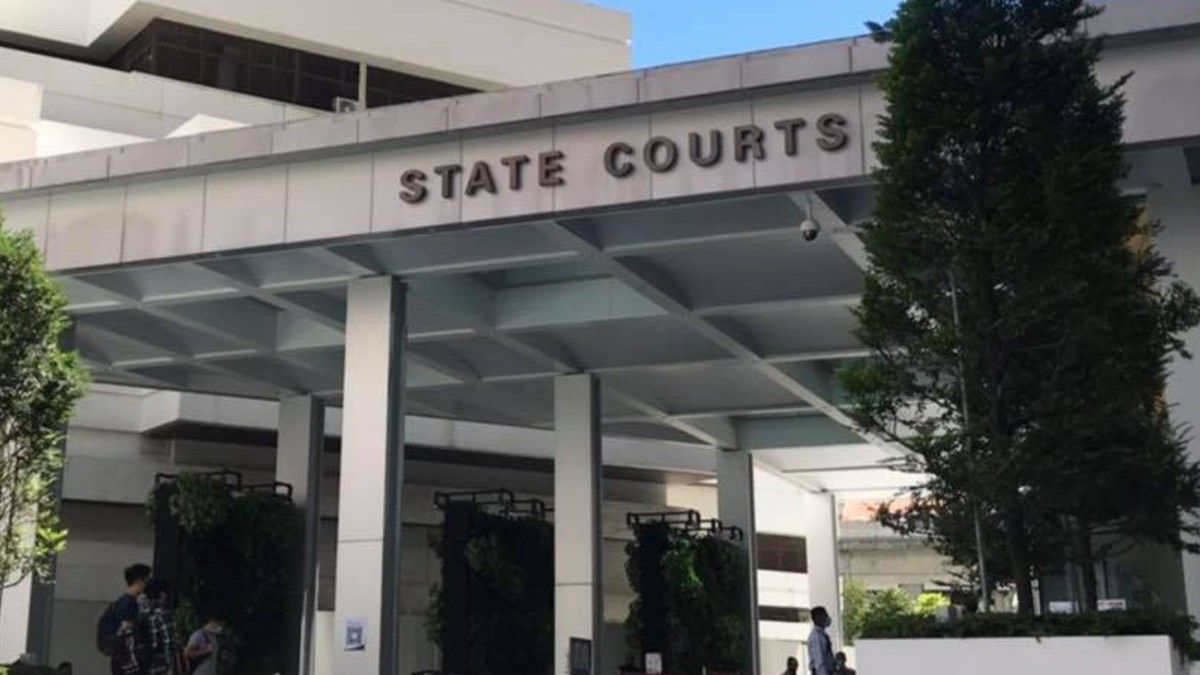

A foreign company that succeeded in a defamation claim by default has been awarded no damages, after a Singapore court found it had failed to prove a business reputation in the country.
The decision in Haweina Trading Co Ltd v Bling Blink SG Pte Ltd and another was delivered by Deputy Registrar Evans Ng on Friday, 17 July 2026.
The claimant, Haweina Trading, is a Taiwan-based company providing eyelash beautification services, products and training courses. The first defendant, Bling Blink SG, is a Singapore company in the same trade. Its sole shareholder and director, Ng Hui Fen, was the second defendant.
The parties had no prior dealings until April 2025. According to the judgment, the defendants fell out with a supplier they shared with the claimant and attributed the dispute to the claimant.
The defendants then published a series of posts about the claimant and its representatives on their social media accounts. The claimant sued for libel.
Because the defendants did not file a notice of intention to contest or not contest, a default judgment was entered against them. Questions of defamatory meaning and identification were therefore not argued, and the matter proceeded to an assessment of damages, at which the claimant sought general damages only.
At that stage the court addressed a threshold question. Unlike a natural person, a company is not presumed to have a reputation. It must prove that it holds a trading or business reputation within Singapore at the time of the publications.
The Deputy Registrar cited the High Court decision in Qingdao Bohai Construction Group Co, Ltd and others v Goh Teck Beng and another, noting that this is a question of fact to be established by evidence. If not proved, no damages can follow.
The claimant had pleaded that it operated from Taiwan but had customers across Asia, including Singapore, and a reputation within the beauty community in Taiwan and Singapore.
Its sole witness was Yeh Yi-Wei, a director of the company. She gave evidence that the company had about 13,700 followers on Instagram and 2,517 on Threads, and said it relied primarily on social media to conduct and promote its business.
The Deputy Registrar found this reasoning unpersuasive. He stated that there was no necessary relationship between follower numbers and the existence of a business reputation in a particular jurisdiction.
He further noted that no evidence showed how many followers were from Singapore, or when they were gained.
An additional allegation, that a potential client in Singapore had seen the posts, was undermined by a missing date and by screenshots that did not establish that the person was from Singapore rather than elsewhere.
Under cross-examination by the second defendant, Yeh confirmed that the company had no physical premises or staff in Singapore, kept no records of Singapore customers or revenue, held no local courses, had received no local awards, and had not been featured by any Singapore media.
Given a further opportunity to produce documents, Yeh again pointed to the company's follower count, which she said had reached 14,100 by the hearing on 16 June 2026, describing the company as belonging to the top tier.
The Deputy Registrar said this made clear that the claimant relied purely on its online presence, which he could not accept as proof of a Singapore reputation.
Concluding that the claimant had failed to establish the requisite reputation, the court held that it was not entitled to any award of damages. Parties will be heard on costs.