Drone pilot captures aerial view of Gillman Forest amid calls to rethink housing plans
A drone pilot has released sweeping aerial footage of Gillman Forest, drawing fresh attention to its ecological significance as conservation advocates urge the Government to reconsider housing plans for the site. The video coincides with ongoing public consultation on HDB's redevelopment proposal.
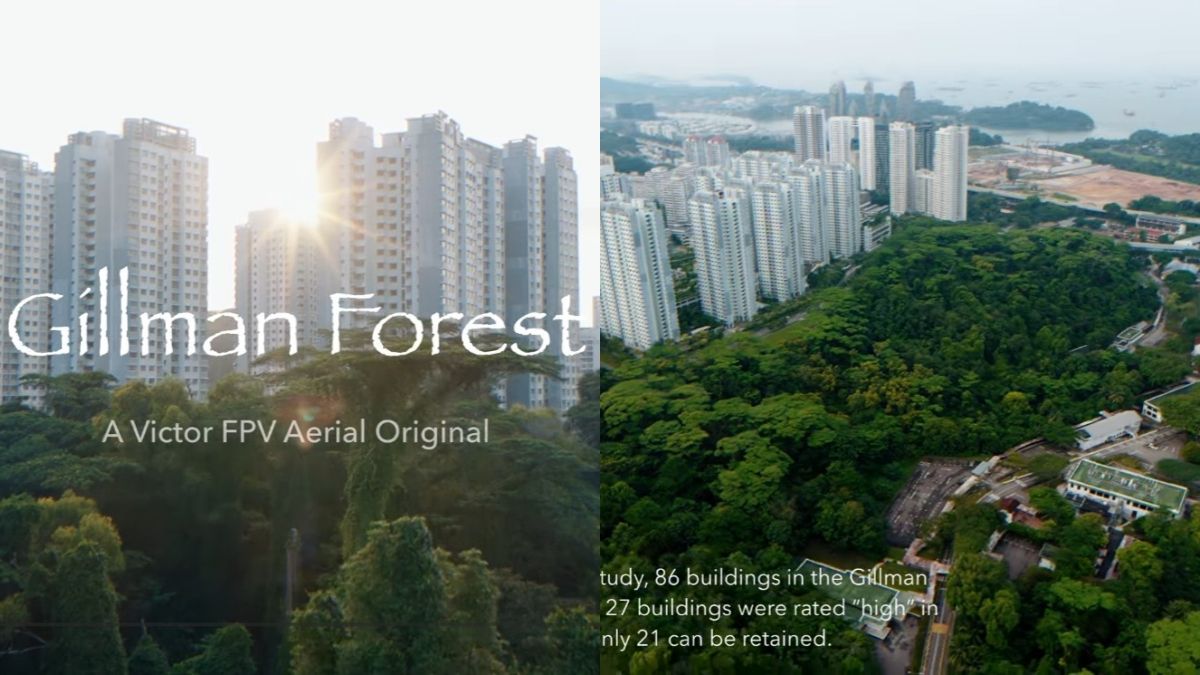
- A drone pilot showcases Gillman Forest as calls grow to rethink housing plans
- Drone footage spotlights Gillman Forest as calls mount to reconsider housing development
- Aerial footage of Gillman Forest fuels debate over proposed housing development

Aerial footage captured by a drone pilot has brought renewed public attention to Gillman Forest, as conservation advocates continue urging the Government to reconsider plans to develop housing on part of the site.
Victor, a professional drone pilot and engineer based in Singapore, shared a nearly three-minute First-Person View (FPV) drone video on 15 July 2026, showcasing the forest canopy and surrounding landscape from above.
The footage was intended to raise public awareness of the area's ecological value amid ongoing public consultation on redevelopment plans announced by the Housing and Development Board (HDB).
Victor highlighted HDB's announcement on 10 July that it intends to build new homes at Gillman Barracks that would be "designed around nature" following environmental and heritage studies.
He encouraged members of the public to submit feedback through HDB's consultation exercise, which runs from 10 July to 6 August 2026.
In the video's YouTube description, Victor wrote: "This mature secondary forest supports rich biodiversity, connects important green corridors, and reminds us that nature and history can coexist in the heart of our city."
He also urged viewers to sign an online petition calling for Gillman Forest to be protected from redevelopment.
The approximately 22-hectare Gillman Forest provides habitat for a wide range of native plants, birds, mammals, reptiles and insects, making it one of Singapore's remaining mature secondary forests.
Nature lovers urge authorities to reconsider forest clearance plans and protect Singapore's green spaces
The drone footage prompted extensive discussion online, with many commenters expressing concern over the proposed clearing of Gillman Forest and other green spaces for housing development.
Several argued that forest clearance should not become the default solution to meeting Singapore's housing needs.
One commenter urged the authorities not to "choose the easiest solution by cutting the trees", adding that Singapore should pursue a longer-term housing strategy that considers the interests of ordinary residents rather than focusing only on those able to afford private landed homes.
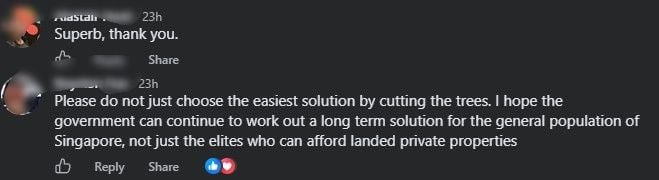
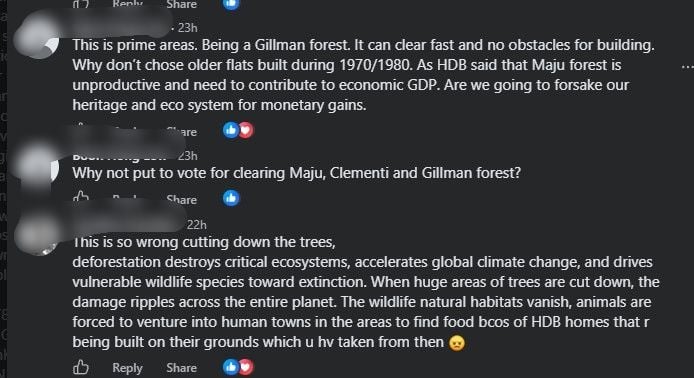
Others questioned why forested land had been selected when older estates or alternative land parcels could potentially be redeveloped instead.
Another wrote that Singapore should not "forsake our heritage and ecosystem for monetary gains".
Environmental concerns also featured prominently in the discussion.
One commenter warned that "deforestation destroys critical ecosystems" and threatens wildlife habitats, while another described Gillman Forest as "the heart and lungs for many living species", expressing hope that growing public support could help preserve the area.
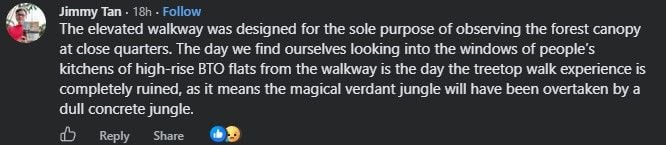
Freeland editor Jimmy Tan also criticised the redevelopment proposal, arguing that it would fundamentally alter one of the forest's unique visitor experiences.
"The elevated walkway in Gillman Forest was designed for the sole purpose of observing the forest canopy at close quarters," Tan said.
"The day we find ourselves looking into the windows of people's kitchens of high-rise BTO flats from the walkway is the day the treetop walk experience is completely ruined, as it means the magical verdant jungle will have been overtaken by a dull concrete jungle."
Online campaigns opposing the redevelopment have also continued to gather momentum.
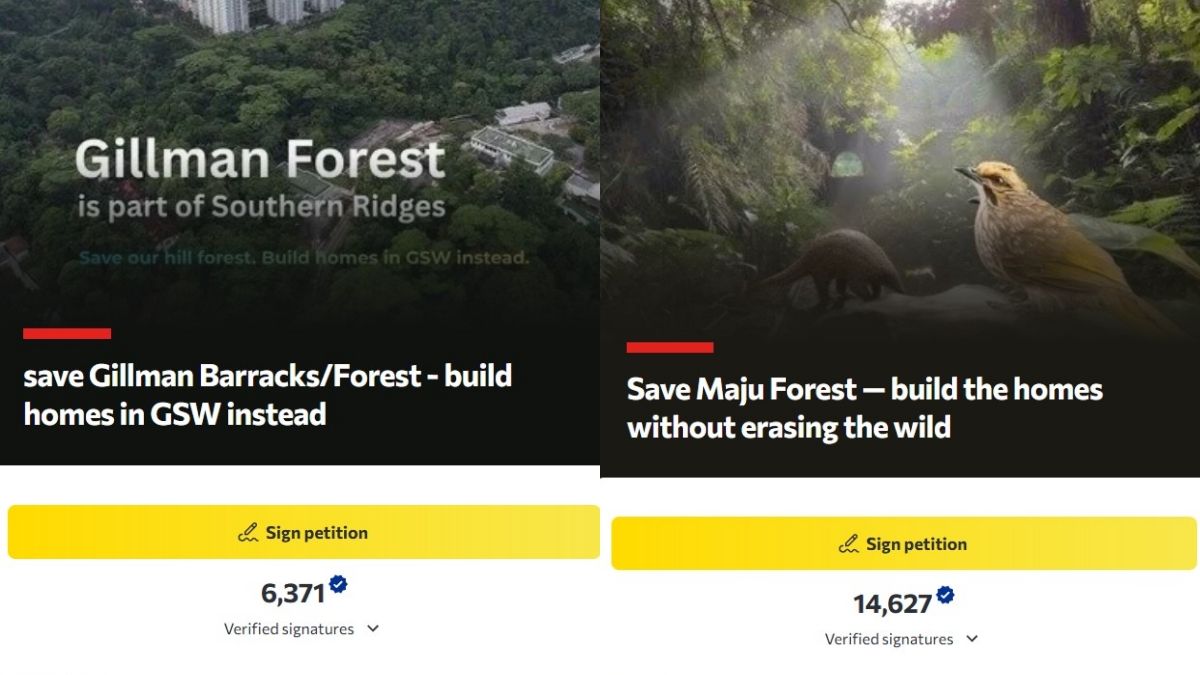
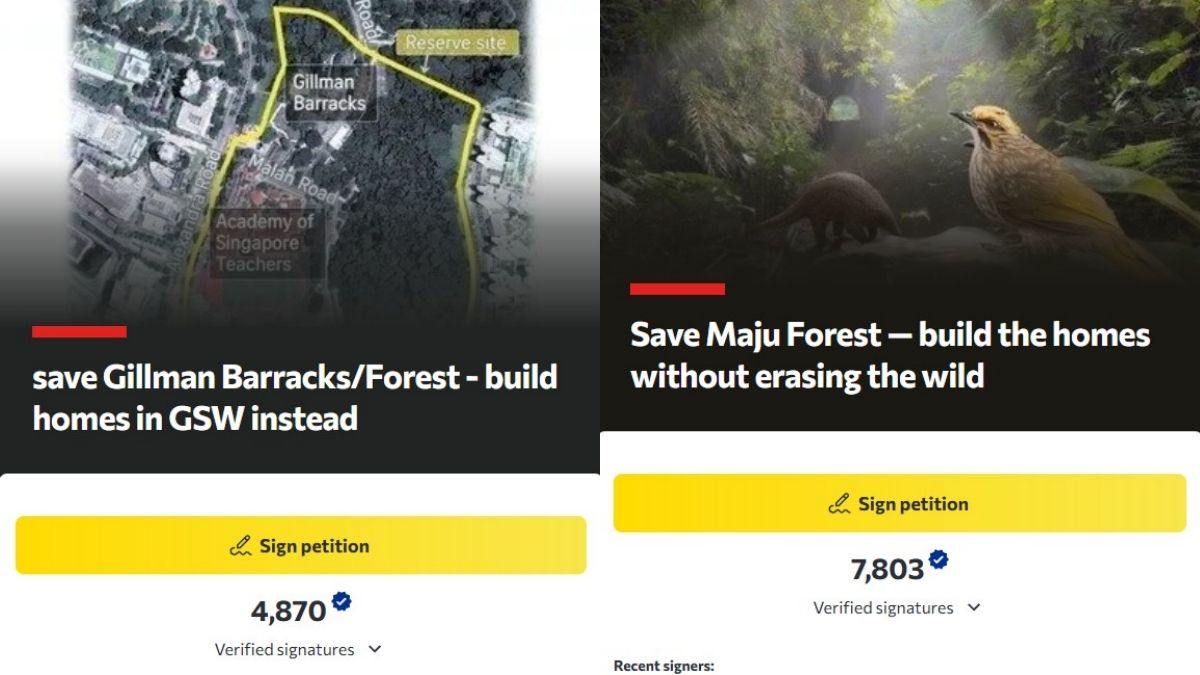
As of 3pm on 16 July 2026, the "Save Gillman Barracks/Forest" petition had attracted more than 6,510 signatures.
A separate petition, titled "Save Maju Forest — build the homes without erasing the wild", launched on 11 July, had collected more than 15,120 signatures within five days.
Together, the two campaigns had garnered more than 21,600 online supporters.
The campaigns gained traction after HDB announced on 10 July that it intends to develop new housing at Gillman Barracks and the Sunset Way site in Clementi.
Both petitions argue that increasing Singapore's housing supply should not come at the expense of remaining forests, biodiversity or historically significant community spaces.
Supporters have instead called on the Government to pursue solutions that meet housing demand while protecting environmentally and culturally important sites for future generations.
Academic calls for greater transparency as studies provide evidence but decision-making remains unclear
The debate has also attracted academic attention.
In a commentary published by CNA on 14 July, Melissa Low, Head of the NUS Sustainability Academy and Research Fellow at the Centre for Nature-based Climate Solutions, called for greater transparency in how environmental and heritage considerations are balanced against housing requirements.
Low said the discussion had evolved into "a broader question" about how planning decisions involving green spaces and heritage sites are made, as well as how members of the public are involved in those decisions.
While acknowledging that environmental and heritage studies had been conducted, she questioned how their findings were ultimately weighed against housing needs.
According to Low, the published reports did not explain why the proposed redevelopment had been selected over possible alternatives.
She also argued that public engagement should begin much earlier through community briefings and discussions, rather than relying primarily on online feedback exercises after redevelopment proposals have already been announced.
Low warned that consultations perceived as taking place only after major decisions have effectively been made risk becoming "an exercise in recording objections rather than shaping policy".
She urged planning agencies to present alternative development scenarios, explain the trade-offs involved and demonstrate how public feedback influences final planning decisions.
HDB outlines environmental safeguards
HDB has maintained that its proposals for Gillman Barracks and Sunset Way were informed by detailed environmental and heritage studies.
The agency said findings from those studies, together with feedback submitted before the 6 August consultation deadline, would help shape the final development plans, including housing yield, flat mix, project classification and implementation timelines.
At Gillman Barracks, HDB plans to develop public and private housing near the Greater Southern Waterfront while retaining more than 20 of the site's 86 heritage buildings.
The proposal also includes preserving most of the existing secondary forest, a natural forest stream and ecological corridors.
Environmental surveys identified 293 plant species and 178 fauna species within the site, including 33 species of conservation significance.
HDB said ecological corridors measuring at least 30 metres wide, around eight hectares of connected green space and phased vegetation clearance would be incorporated to reduce impacts on wildlife.
The agency also plans to retain four heritage clusters, which could be adapted for future commercial and community uses.
For the 23-hectare Sunset Way site, HDB said the proposed estate would expand housing options in western Singapore while incorporating biophilic landscape design using native plant species.
Approximately eight hectares of land, including a natural freshwater stream and areas along the former Old Jurong Line, would be retained as wildlife habitat and connected through a proposed nature trail.
Public consultation on both developments remains open until 6 August 2026, with the eventual plans expected to reflect both technical study findings and public feedback submitted during the consultation period.