PTC survey: Crowding, bus reliability and train cooling top commuter concerns despite 87% satisfaction
Crowding, irregular bus waiting times, inconsiderate commuter behaviour and weak train air-conditioning remain Singapore commuters' biggest public transport concerns, according to the Public Transport Council, even as 87 per cent expressed overall satisfaction with the network.
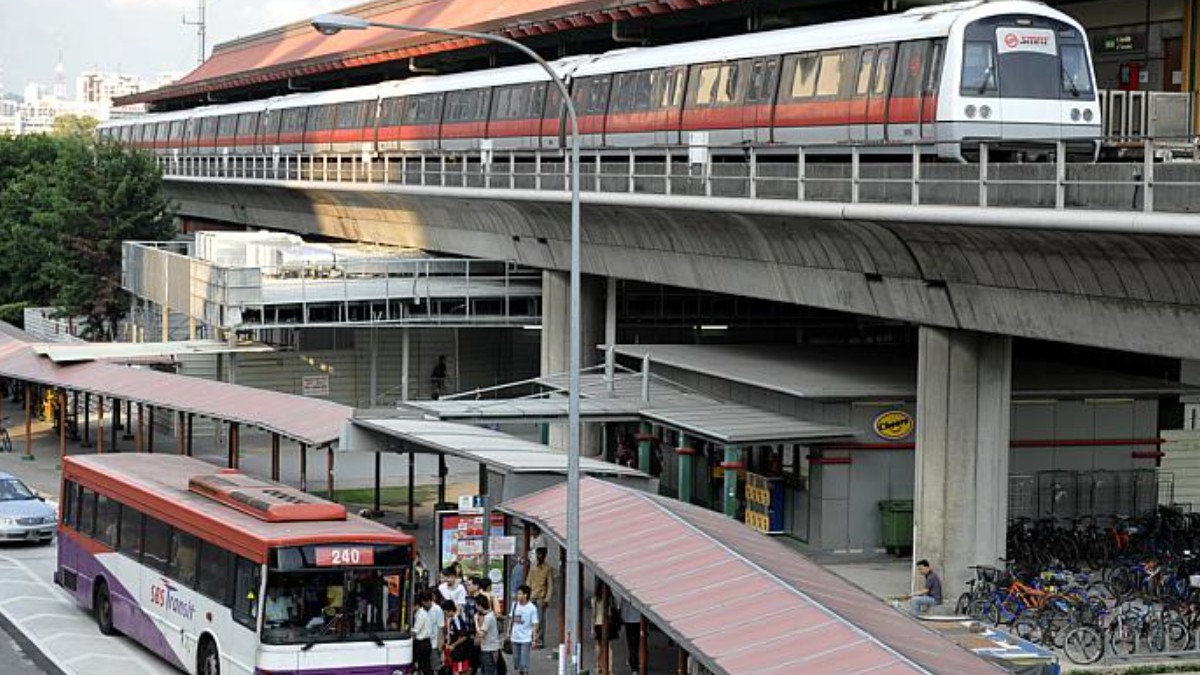
- Overall public transport satisfaction reached 87 per cent, while point-to-point transport satisfaction stood at 96 per cent.
- Crowding, irregular bus services, inconsiderate commuter behaviour and train cooling emerged as commuters' biggest concerns.
- PTC will work with LTA and operators on service reliability, journey planning, boarding efficiency and commuter comfort.

SINGAPORE: Crowding, irregular bus waiting times, inconsiderate commuter behaviour and weak air-conditioning on trains remain the biggest concerns among Singapore commuters despite high overall satisfaction with the public transport network, according to findings released by the Public Transport Council (PTC).
The findings, published on 20 July 2026, draw on the Public Transport Customer Satisfaction Survey 2025, feedback from focus group discussions, social media, news reports and other public feedback channels involving 5,505 commuters aged 15 and above. A separate Point-to-Point Transport Services Customer Satisfaction Survey involving 1,700 commuters also assessed satisfaction with taxi and private-hire services.
Overall, 87 per cent of respondents said they were satisfied with Singapore's public transport system, while 96 per cent expressed satisfaction with point-to-point transport services.
PTC said it has been engaging the Land Transport Authority (LTA), public transport operators and commuters to identify practical ways to improve the areas that received comparatively lower satisfaction scores.
"We understand that many of the proposed solutions require careful balancing of the interests of commuters, operators and the wider public," said PTC chairperson Janet Ang.
"While agencies and operators will continue to improve the hardware of our public transport network, every commuter also has a role to play through greater care, courtesy and consideration for one another."
Crowding and bus reliability remain biggest concerns
Crowding and irregular bus waiting times topped the list of issues raised by commuters.
According to PTC, respondents highlighted inconsistent bus services, with buses sometimes arriving in quick succession or operating at uneven intervals, reducing confidence in journey planning. Many commuters also cited unreliable bus arrival information as a source of frustration.
Peak-hour crowding was felt most acutely by commuters travelling with young children or mobility aids, while train commuters reported increasingly crowded carriages and occasions where they were unable to board the first arriving train.
"Commuters valued certainty and reliability in bus services, especially where few alternative travel options existed," the council said.
Commuters also suggested increasing train frequencies, deploying longer or additional trains and strengthening crowd management measures to better match rising commuter demand.
PTC noted that average daily bus ridership reached 3.84 million trips in 2025, while average daily rail ridership reached 3.70 million trips, contributing to heavier passenger loads across the network.
Operators tackling manpower and capacity challenges
PTC identified the recruitment and retention of bus captains as a major challenge affecting service reliability, particularly when traffic delays or unexpected staff absences occur.
To strengthen manpower, operators are increasing efforts to attract more local bus captains through higher starting salaries and enhanced sign-on incentives supported by the Government.
The council also highlighted several initiatives already introduced to improve public transport capacity.
Since the launch of the Bus Connectivity Enhancement Programme in August 2024, 35 new or extended bus services and enhancements to 71 existing services have been introduced.
More than 40 per cent of Singapore's bus fleet now comprises higher-capacity buses, including double-deckers, while bus operations control centres monitor services in real time to reduce bus bunching and regulate waiting times.
LTA is also upgrading its estimated arrival time system to improve the accuracy and resilience of bus arrival information.
For rail commuters, measures such as pre-peak fare discounts, free off-peak morning rides on the North East Line, Express City Direct Services and the continued expansion of Singapore's rail network are intended to ease congestion and provide alternative travel options.
Better journey planning and smoother boarding proposed
Beyond increasing transport capacity, PTC said it would explore improvements to journey planning tools to help commuters make more informed travel decisions.
The council said it would facilitate discussions with LTA, commuters and application developers on enhancing journey planning applications by providing more detailed travel information, including route comparisons, transfer information, accessibility features and live crowd information.
PTC is also studying ways to improve boarding efficiency.
Possible measures include rear-door boarding on buses where operationally safe, deploying additional service ambassadors and crowd marshals, installing passenger load indicators across more MRT lines and introducing digital screens at busy stations to guide commuters towards less crowded train carriages.
The council also encouraged commuters to move further into buses and trains to maximise available space and improve boarding efficiency for everyone.
Courtesy among commuters remains a concern
The second major concern identified by commuters related to the level of care and consideration shown by fellow passengers.
Common complaints included commuters playing music or videos aloud without headphones, failing to move aside for boarding and alighting passengers and being reluctant to give up priority seats for those who needed them.
PTC said such behaviour could have a greater impact on vulnerable commuters and persons with disabilities.
The council said it will continue strengthening the Caring SG Commuters movement together with LTA, public transport operators, educational institutions and community organisations to promote a more gracious commuting culture.
The initiative promotes four caring norms — "Give Time", "Give Care", "Give a Hand" and "Give Thanks" — while awareness campaigns, learning journeys, volunteer programmes and educational workshops have been introduced over the years to encourage considerate behaviour.
PTC also highlighted schemes such as Helping Hand, which allows commuters with less visible conditions to indicate that they may require assistance during their journeys.
Besides education campaigns, the council said enforcement action may be taken against particularly egregious behaviour that causes significant inconvenience to other commuters.
"Ultimately, we want to build a commuting culture that is rooted in mutual consideration so that commuter interactions in our public transport system can be joyful, sincere and not out of reluctance or fear," PTC said.
Improving comfort on trains
Uneven temperatures and weak airflow on trains also emerged as a significant concern among respondents.
Commuters reported that cooling in some train carriages was "barely perceptible", leaving trains feeling warm and poorly ventilated, particularly during peak periods and on certain rail lines.
Respondents called for stronger cooling, more regular servicing and temperature adjustments to improve thermal comfort.
PTC said train carriage temperatures are generally maintained at around 25°C through sensors and thermostats that continuously monitor conditions.
However, the council acknowledged that passengers may experience temperatures differently depending on passenger loads, whether trains operate on elevated or underground sections, the time of day and individual preferences.
It added that Singapore's warmer climate in recent years may also have increased commuter sensitivity to onboard temperatures, even when cooling systems are operating as intended.
To improve commuter comfort, PTC noted that new North-South East-West Line trains featuring higher cooling capacity and improved airflow are being progressively introduced, with full replacement of older trains targeted for completion in 2026.
The council said it will continue engaging LTA and public transport operators on potential improvements, including optimising air-conditioning performance on older train fleets and reviewing maintenance practices where appropriate.
Majority remain satisfied
Despite the concerns, PTC said the survey showed that most commuters remain satisfied with Singapore's public transport system.
Respondents generally reported feeling safe during their journeys and appreciated the professionalism and knowledge of station staff and bus captains.
The council said the findings demonstrate that while significant progress has been made, improving everyday commuting experiences will require continued collaboration between transport agencies, operators and commuters.
PTC added that it will continue gathering commuter feedback and working with stakeholders to ensure public transport policies and operational improvements remain responsive to commuters' evolving needs.