IRAS recovers over S$6.8 million from eight nightclubs over flower garland tax declaration breaches since 2021
The Inland Revenue Authority of Singapore has recovered more than S$6.8 million in taxes and penalties from eight nightclubs since 2021 for improper declarations involving flower garland sales, while reminding operators that the transactions are subject to GST, income tax and withholding tax.
- IRAS recovered over S$6.8 million from eight non-compliant nightclubs since 2021 over flower garland tax declarations.
- The authority said flower garland sales are generally subject to GST, income tax and withholding tax for non-resident performers.
- IRAS warned that under-reporting income, poor record-keeping and diverting revenue to shell companies may amount to tax evasion.

The Inland Revenue Authority of Singapore (IRAS) has recovered more than S$6.8 million in taxes and penalties from eight nightclubs since 2021 after uncovering improper tax declarations involving flower garland sales, including cases where operators concealed revenue and diverted income through shell companies.
According to Lianhe Zaobao, the authority said it continues to conduct risk-based tax audits across industries and has reminded nightclub operators that flower garland transactions are generally subject to Goods and Services Tax (GST), income tax and, where applicable, withholding tax for payments made to non-resident performing artistes.
IRAS said it has not introduced any new tax policy on flower garland sales. Instead, the authority recently published guidance to help businesses better understand and comply with their existing tax obligations.
The clarification followed the publication of an article in IRAS' TaxBytes electronic newsletter on 3 July 2026, explaining the tax treatment of flower garland sales at nightclubs.
A further reminder was issued on 9 July.
Existing tax rules clarified
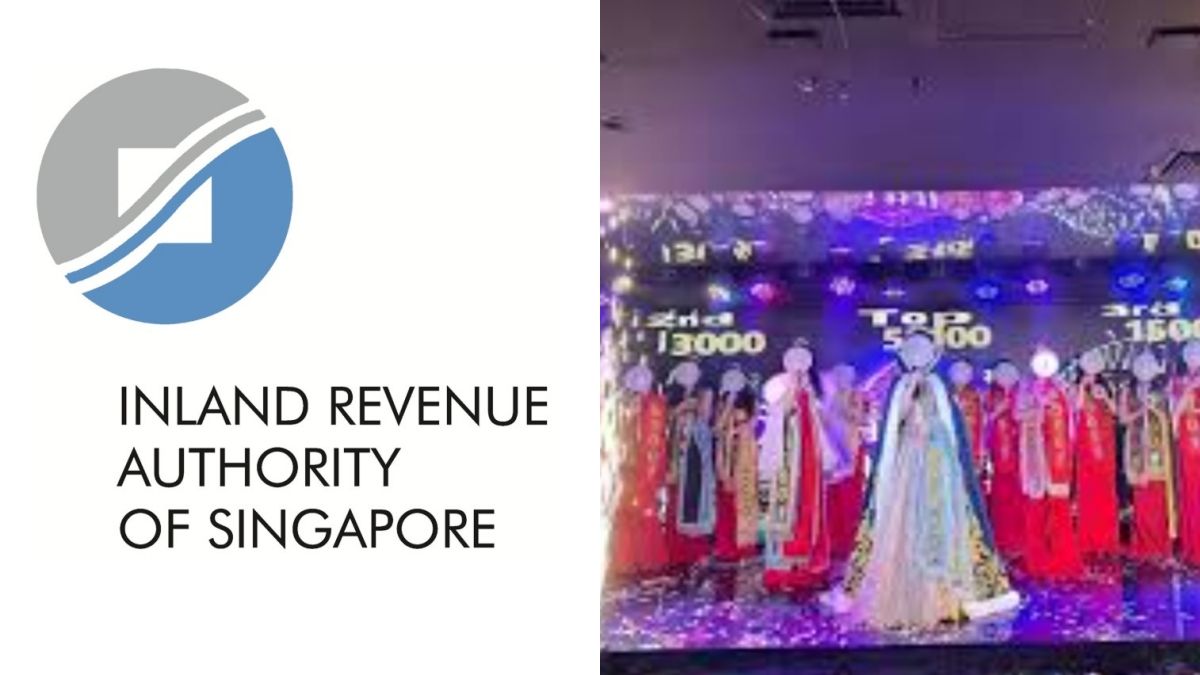
IRAS said flower garlands, commonly known as "挂花" or "吊花", are sold by some nightclubs to customers who wish to publicly honour performing artistes during live performances.
Customers purchase the garlands, which can range in price from S$50 to as much as S$100,000, before they are presented on stage to a performer selected by the customer. The performing artiste typically receives an agreed share of the proceeds, either as a fixed percentage or as part of their remuneration.
According to IRAS, these purchases are not regarded as voluntary tips or simple flower purchases.
Instead, customers are "paying for the right to publicly honour a performing artiste and to take part in the entertainment experience offered by the nightclub". As such, the authority said the transactions constitute a supply of services and are subject to GST.
IRAS added that GST applies to the full value paid by customers rather than only the portion retained by the nightclub.
"For example, if a customer pays S$500 and the nightclub later gives S$200 to a performer, GST is still chargeable on the full S$500 because the nightclub is regarded as supplying the service," the authority said.
Nightclubs generally regarded as principal
IRAS said the tax treatment depends on whether the nightclub acts as the principal selling the flower garlands or merely as a collecting agent for performers.
However, it noted that in most cases, nightclubs are regarded as the principal because they control the sales process by setting prices, collecting payments, distributing proceeds and overseeing performers' activities.
As a result, performing artistes generally have little influence over pricing or payment arrangements.
For income tax purposes, IRAS said all flower garland sales must be recorded as the nightclub's gross income, although payments made to performers may qualify as deductible business expenses.
The authority also warned against artificial arrangements designed to reduce tax liabilities.
It said attempts to split flower garland income among related entities or divert revenue to companies that are not registered for GST could be treated as tax evasion.
Record-keeping and withholding tax obligations
IRAS said businesses are required to maintain proper supporting records and produce them upon request to verify the completeness and accuracy of their tax reporting.
The authority conducts regular risk-based tax audits to ensure businesses accurately declare their taxes.
Businesses that fail to maintain adequate records or under-report their tax obligations may face penalties and enforcement action.
IRAS also reminded operators that payments made to non-resident performing artistes, including their share of flower garland sales, are subject to a 15 per cent withholding tax.
Nightclubs are required to file and pay the withholding tax by the 15th day of the second month following payment to the non-resident performer.
The authority stressed that proper record-keeping and timely compliance are essential to avoid disputes.
Past cases uncovered deliberate concealment
IRAS said some nightclub operators had become "creative" in the way they reported flower garland income, resulting in enforcement action.
One case involved Goh Kim Teck, who operated Century 21st Night Club in Rochor.
According to IRAS, Goh instructed staff not to record cash payments for flower garlands through the club's cash register between 2011 and 2014.
When the club's bookkeepers prepared GST filings, he concealed the actual sales figures from them.
In 2021, Goh was jailed for three weeks and fined S$8,500 after being convicted of tax evasion and omitting GST declarations.
He was also ordered to pay a tax penalty of nearly S$340,000.
In another case concluded in 2022, Soon Kok Khoon, who operated Club Posh Entertainment and West Palace Entertainment, was jailed and penalised S$630,861 for similar offences.
IRAS said Soon instructed accountants to omit revenue from flower garland sales, which ranged from S$50 to S$100,000, together with the associated output GST.
He also directed staff to divert sales revenue from the GST-registered clubs to two shell entities that were not registered for GST.
The authority said such arrangements were designed to understate taxable income and avoid tax liabilities.
Guidance intended to improve compliance
Responding to media queries, IRAS said it regularly publishes tax guidance to help taxpayers and businesses understand and fulfil their obligations.
A spokesperson said the TaxBytes article on flower garland sales was intended to remind nightclub operators of their existing responsibilities and did not introduce any new tax policy or alter the current tax treatment.
The authority reiterated that businesses should accurately report all taxable income, maintain proper records and comply with GST, income tax and withholding tax requirements to avoid penalties and enforcement action.