PSP calls for single-seat by-elections in GRCs, reviving 2023 proposal after Faishal's resignation
The Progress Singapore Party has called for legal reform requiring a by-election whenever a GRC MP vacates their seat, reviving its 2023 proposal to replace the GRC system.
- PSP proposes a "Single Seat By-Election" whenever a GRC MP vacates their seat.
- The party cites the 2019 Wong Souk Yee ruling as the legal gap it wants addressed.
- PSP revived its July 2023 proposal to replace GRCs with SMCs plus a minority representation scheme.

The Progress Singapore Party (PSP) has called for a review of Singapore's electoral law to require a by-election whenever a Group Representation Constituency (GRC) Member of Parliament (MP) vacates their seat, in a Facebook statement posted on 22 July following Associate Professor Muhammad Faishal Ibrahim's resignation.
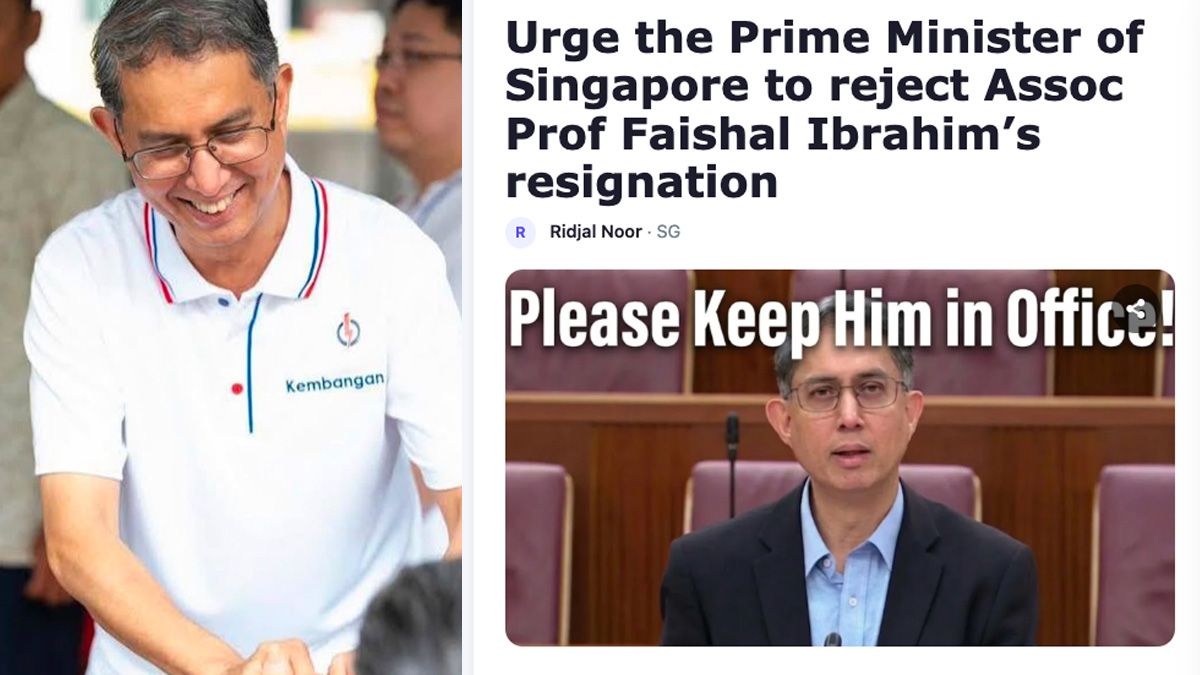
Faishal resigned on 20 July as Acting Minister-in-Charge of Muslim Affairs, Senior Minister of State for Home Affairs, MP for Marine Parade-Braddell Heights GRC, and a PAP member, over a "lapse of judgment" in his handling of interactions with a woman who is a member of the public.
Police and the Attorney-General's Chambers assessed that no criminal offence had been committed by either party.
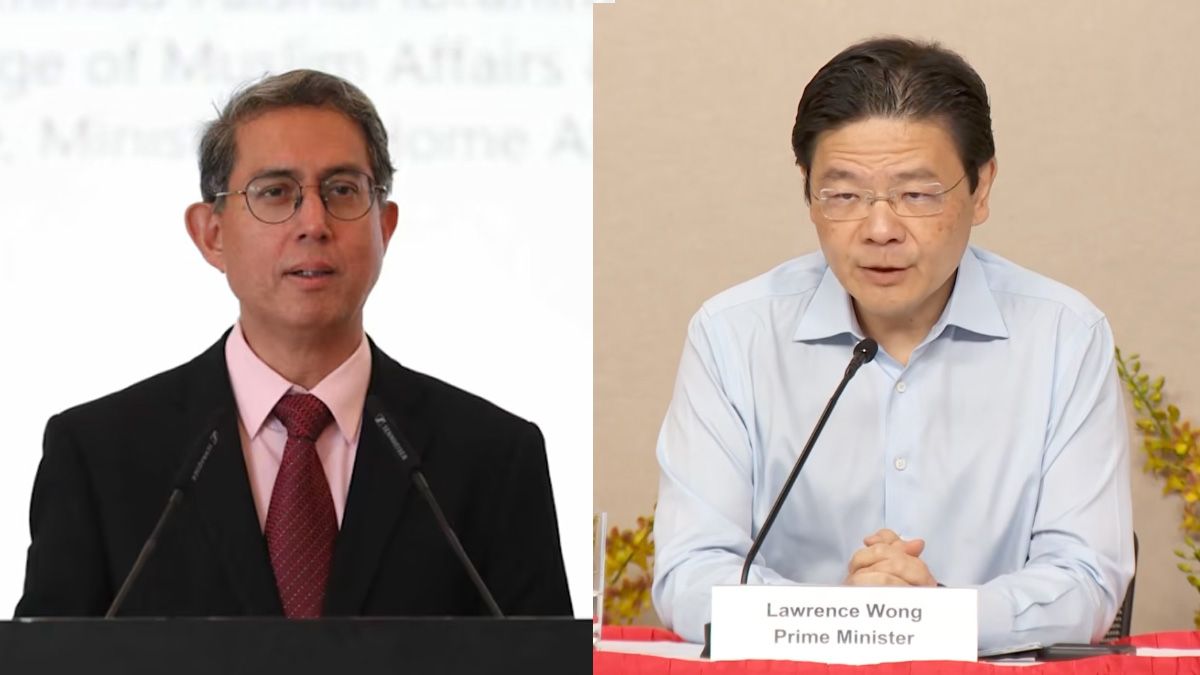
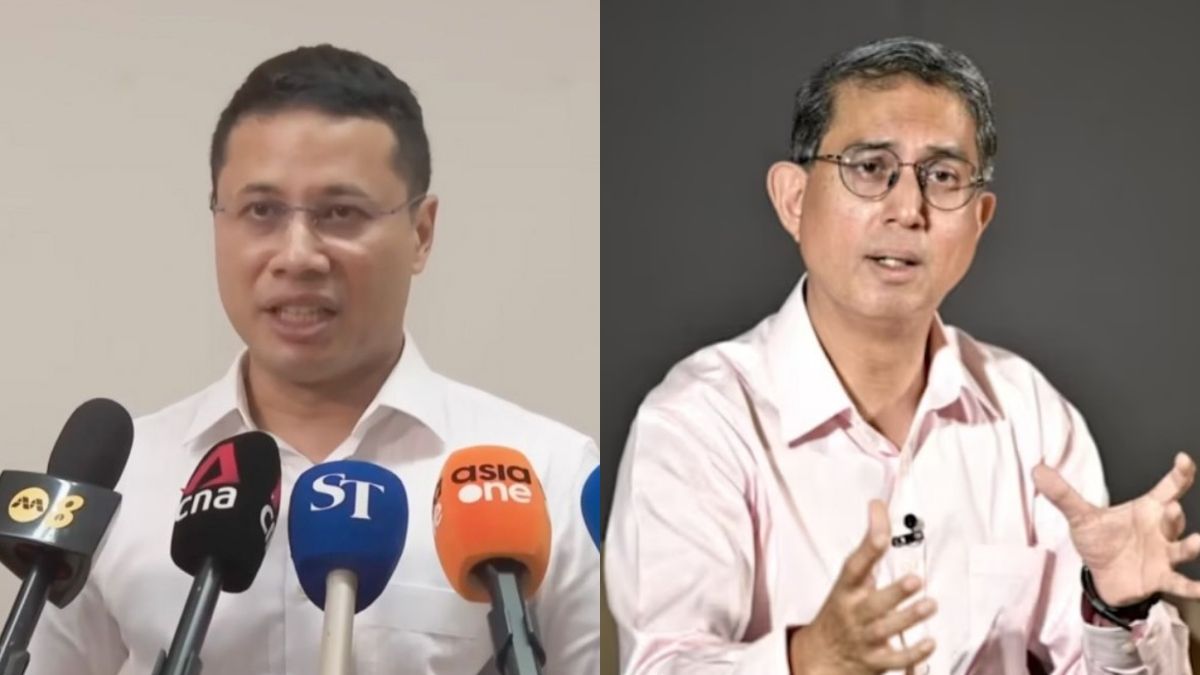
Education Minister Desmond Lee confirmed on 20 July that no by-election would be held for the vacated seat, and PM Lawrence Wong addressed the matter further at a press conference on 22 July, saying he had tried his "very best" to find a way for Faishal to remain in office but concluded that making an exception would harm public trust.
PSP's statement opened by urging the public to cease speculation and allow Faishal and his family privacy to heal, before turning to what it described as a broader issue the case had highlighted.
The legal gap PSP wants addressed
PSP's statement noted that under current law, a by-election of an entire GRC is not required when a single MP vacates their seat, a position affirmed by the Court of Appeal in Wong Souk Yee v Attorney-General, a case brought by Dr Wong Souk Yee of the Singapore Democratic Party following Halimah Yacob's 2017 resignation from Marsiling-Yew Tee GRC. PSP said this "leaves a gap in representation that Parliament should now address."
The party proposed that whenever a GRC-elected MP vacates their seat, a by-election should be held specifically to fill that seat, and that if the vacated seat was the GRC's designated minority seat, the by-election should be contested only by minority candidates, a mechanism it termed the "Single Seat By-Election."
PSP's three principles
PSP grounded its proposal in three principles.
First, it argued the proposal was consistent with the GRC scheme's original purpose of ensuring minority representation, and that a vacancy left unfilled through an electoral process weakens that objective.
The party challenged those who might argue existing minority representation remains "sufficient" despite a vacancy to specify what that threshold actually is, asking why 18 GRCs were contested at the 2025 General Election if fewer minority MPs would have sufficed.
Second, PSP argued residents should not have to accept reduced representation for an extended period when a significant portion of the parliamentary term remains, saying every constituency deserves the full slate of representatives voters elected.
Third, the party argued that a by-election producing MPs from different parties within the same GRC should be seen as an opportunity rather than a weakness, allowing residents to compare different parties' approaches to representation before the next general election, describing this as "an advantageous gauge" for voters.
Reviving the case against GRCs
PSP's statement also revived a proposal it says it first raised in July 2023: that the entire GRC system be replaced with Single Member Constituencies (SMCs), paired with a mechanism to preserve minority representation.
The party set out two variants: a minority Non-Constituency MP (NCMP) scheme, under which the best-performing unelected minority candidates would be appointed if too few minorities were elected under a pure SMC system, or a hybrid system combining SMC elections with a proportional representation component requiring parties to field multiracial candidates and party lists.
PSP said Parliament had previously voted against abolishing GRCs, but argued that recent events showing vacancies involving minority MPs "can and do arise" made it timely to revisit alternative models. The party said it did not believe legal reform "should be driven by personalities or isolated incidents," but should instead be guided by "enduring principles that strengthen our democracy."
A question raised, and set aside, in 1988
The proposal raises a structural question PSP's statement does not directly address. Under the GRC scheme, an MP is elected to represent the constituency as a whole rather than a legally demarcated sub-ward within it. The division of a GRC into areas such as Faishal's Kembangan ward is an informal arrangement decided by the winning team itself, not a boundary fixed in law.
Then-First Deputy Prime Minister Goh Chok Tong described this explicitly in his reply closing the second reading debate on 12 January 1988, using Marine Parade, Joo Chiat and Kampong Kembangan as a hypothetical example of a "Katong GRC," and explaining that each MP would take "primary responsibility" for one area, an assignment he said would rotate among the team every 18 months so that "you will not end up in a situation where there are too many cooks spoiling the soup".
Since no ward within a GRC has a distinct legal identity apart from this informal, rotating arrangement, a "Single Seat By-Election" confined to one MP's former area would likely require Parliament to first create a new legal category of demarcated sub-constituency within a GRC, a more substantial change than simply mandating a by-election for the vacancy itself.
Notably, the question of what should happen when a GRC loses some but not all of its MPs was raised during that same debate.
Leong Horn Kee, then MP for Thomson, suggested Parliament "consider whether we should allow a by-election to take place automatically in the case where two out of three MPs are not holding office," proposing a graduated trigger tied to how many seats remained filled, rather than the strict all-or-nothing threshold that was ultimately adopted.
That proposal was not taken up, and the Bill as passed required all seats in a GRC to be vacated before a by-election could be held, the position later upheld by the Court of Appeal in 2019.