Malaysia relocates 126 Rohingya refugees from UNHCR office as authorities begin screening process
Malaysian authorities relocated 126 Rohingya refugees from outside the UNHCR office in Kuala Lumpur after they set up a temporary settlement. Police said those without documents would be detained, while documented refugees would have their status verified before alternative accommodation is arranged.
- Malaysian authorities relocated 126 Rohingya refugees from outside the UNHCR office for screening and documentation.
- Refugees said they travelled from Penang after being driven from their homes, while police described the move as voluntary.
- The incident has intensified concerns over refugee protection, immigration enforcement and rising anti-Rohingya sentiment in Malaysia.

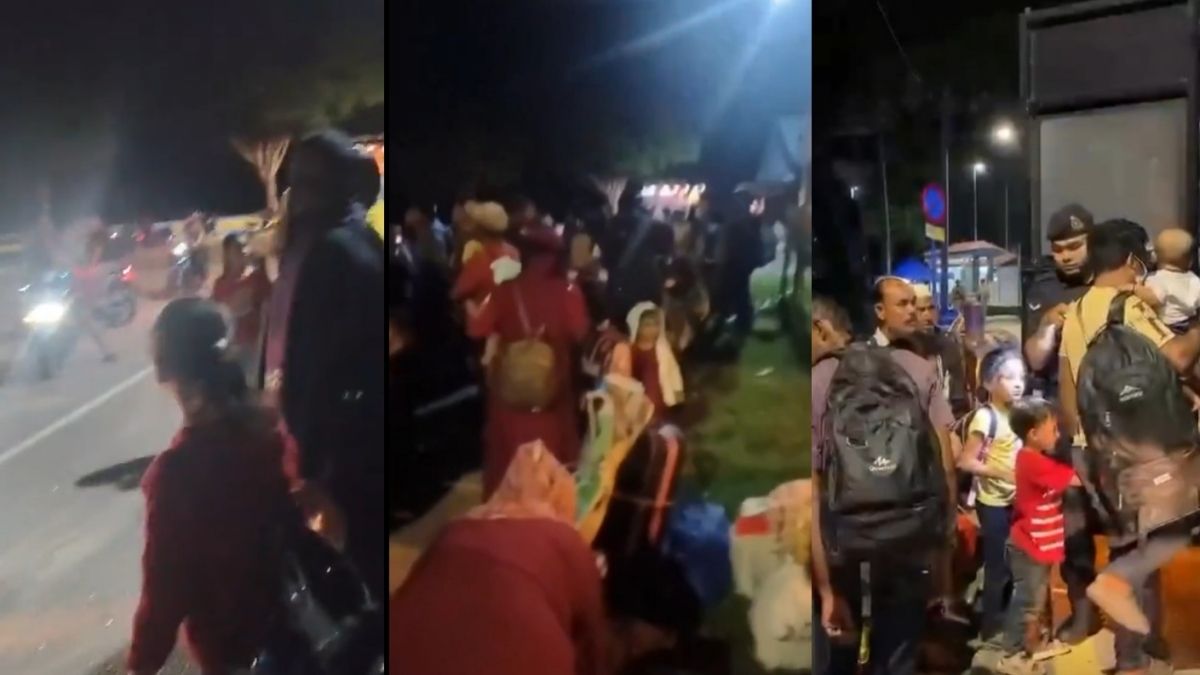
Malaysian authorities have relocated 126 Rohingya refugees who had gathered outside the Office of the United Nations High Commissioner for Refugees (UNHCR) in Kuala Lumpur after they erected tents and turned the area into a temporary settlement.
The operation took place on the evening of 27 July 2026 after police said the area outside the UNHCR office in Jalan Bukit Petaling was a sensitive location that could not be used as a campsite or temporary shelter.
Kuala Lumpur police chief Datuk Fadil Marsus said police officers, together with the Immigration Department, moved the refugees to the Kuala Lumpur Police Contingent Headquarters, where they would undergo screening and documentation.
"We will conduct the screening at a more suitable location.
Those without documents will be detained, while those with documents will first have their status verified by the UNHCR," Fadil said in a statement.
He added that UNHCR, together with its support units and non-governmental organisations, would identify suitable accommodation for refugees holding valid UNHCR documents.
"We cannot take action under the Immigration Act against holders of valid UNHCR cards," he said.
Screening and verification
According to police, 58 of the 126 people relocated were adults. Authorities said everyone cooperated throughout the operation and no incidents involving obstruction of public officers were reported.
Police also said they had not yet verified reports that two additional buses carrying Rohingya refugees were travelling to Kuala Lumpur.
The relocation operation began at about 8.20pm using four police trucks after the two vehicles initially deployed were found to be insufficient because many of the refugees were carrying luggage and personal belongings.
Earlier local media reported that more than 100 Rohingya asylum seekers, including families with their belongings, were taken away in four police trucks at around 8.30pm.
Refugees travelled from Penang
The refugees had arrived in Kuala Lumpur earlier on 27 July after travelling overnight on three buses from the northern state of Penang.
According to Reuters, many of the refugees, including women and children, said they had been driven from their homes by local residents in Penang before travelling to the capital to seek help from the UNHCR with possible resettlement.
One refugee, Syed Kasim, said he arrived outside the UNHCR office with his wife and children in the early hours of Monday but had received no assistance.
"Nobody helped our problem, nobody understands," he said, adding that he had lived in Malaysia for 20 years.
Penang police offered a different account, saying the Rohingya had voluntarily travelled to Kuala Lumpur with assistance from state and federal authorities, including Malaysia's National Security Council.
Seberang Perai Utara district police chief Anuar Abdul Rahman said the transfer was organised because of "economic and territorial competition" that had emerged following an increase in the Rohingya population in the area.
Government responds
Prime Minister Anwar Ibrahim said the gathering outside the UNHCR office had caused concern among members of the public and warned that immigration authorities would detain anyone without valid permits.
"No one has the right to take over any part of the city," Anwar said in a video posted on social media.
The comments came as authorities sought to reassure residents that the situation was under control while enforcing immigration procedures.
Rights groups raise concerns
Human Rights Watch criticised the authorities' response, arguing that refugee protection should be prioritised over detention.
Bryony Lau, the organisation's Deputy Asia Director, said Rohingya refugees in Malaysia faced constant fear of arrests and immigration raids, a situation she said had worsened because of increasing online hate directed at the community.
"The Malaysian government should prioritise protecting refugees who have been evicted from their homes instead of terrifying them further by detaining them," she said.
UNHCR also expressed concern last week over what it described as rising online hate speech, disinformation and dehumanising narratives targeting Rohingya and other refugee communities in Malaysia.
The agency warned that such rhetoric could encourage harassment, discrimination and violence offline.
Broader refugee challenges
Malaysia is not a signatory to the 1951 United Nations Refugee Convention and treats asylum seekers and refugees as undocumented migrants under its immigration laws.
However, the country has long been regarded as a place of refuge for Rohingya fleeing persecution in Myanmar, where the Muslim minority has faced decades of discrimination and violence.
According to the UNHCR, around 126,000 Rohingya refugees were registered in Malaysia at the end of February 2026, although rights groups believe many more remain undocumented.
Public attitudes towards the Rohingya have hardened since the COVID-19 pandemic, when refugees were widely accused on social media of spreading disease, disregarding local customs and competing with Malaysians for jobs.
Rights organisations say the recent increase in online misinformation and hate speech has fuelled greater hostility towards Rohingya communities, contributing to harassment, displacement and school closures in some areas.