US charges Atlanta man after phone wipes itself during border search
US prosecutors are pursuing an unprecedented case against Atlanta resident Samuel Tunick, accused of destroying evidence after his phone, running privacy software GrapheneOS, wiped its data during a border search.
- Atlanta man charged after phone's privacy feature erased data during border search
- Defence says questioning was pretext to probe his Cop City activism
- Case may be first prosecution targeting a duress passcode feature

The United States Department of Justice has charged an Atlanta resident with destroying evidence after his phone wiped itself during a search at an international airport, in a case security experts describe as unprecedented.
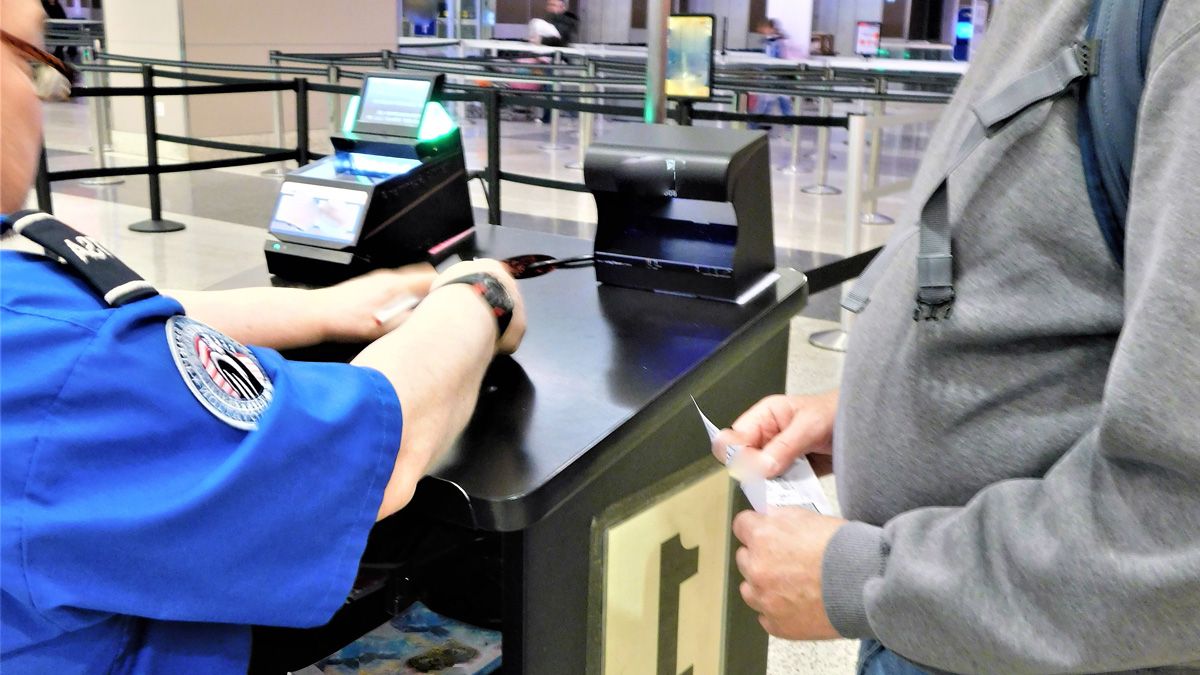
Samuel Tunick, known as Sam Tunick, was stopped for questioning at Hartsfield-Jackson Atlanta International Airport on 24 January 2025, after returning from a trip to the Dominican Republic. He now faces prosecution under a federal statute rarely applied to digital devices.
Prosecutors allege Tunick violated 18 U.S.C. § 2232(a), a law that criminalises destroying property to prevent its lawful seizure and carries a maximum sentence of five years' imprisonment. Tunick has pleaded not guilty.
The case centres on GrapheneOS, an open-source operating system built for Google Pixel phones that emphasises privacy and security. One of its features allows a user to set a duress passcode, which wipes the device instead of unlocking it.
The airport encounter
According to court filings, Customs and Border Protection agents had circulated an internal alert naming Tunick hours before his arrival, describing him as under investigation for suspected terrorism activities linked to his alleged association with the movement opposing Atlanta's planned police training complex, known as Cop City.
Tunick was taken to a secondary screening room, where agents questioned him. His defence team says the questioning focused on child sexual abuse material, which they argue was pretext for what the defence motion calls a fishing expedition into Tunick's connections to Cop City protests.
The defence further states Tunick asked four times to speak with a lawyer and was refused on each occasion. Agents reportedly did not produce a warrant or inform him of his rights during questioning.
Government witnesses have disputed this characterisation. Larry Findley, a Customs and Border Protection officer, testified that agents were conducting a routine inspection, telling the court they were simply looking for anything that is prohibited.
Agents repeatedly asked Tunick to unlock his phone, warning it would be seized if he refused. When he provided a passcode, the defence motion states the screen went blank, flashed several times, and the phone appeared to restart, erasing its contents.
Legal and constitutional questions
A notable detail in the case is that Customs and Border Protection agents themselves reportedly entered the passcode that triggered the wipe, a point the defence says complicates the government's argument that Tunick intentionally destroyed evidence.
Assistant federal public defender Matthew Dodge, representing Tunick, described the statute's application to this case as incredibly rare. The defence has filed a motion to suppress the evidence obtained, arguing the search violated Tunick's constitutional rights.
Customs and Border Protection maintains that no warrant was required, asserting Tunick had not yet legally crossed the border when he was questioned, a position reflecting the agency's longstanding claim of broad search authority at ports of entry. A ruling on the suppression motion is not expected before the end of October.
Reactions from privacy experts
Cybersecurity and surveillance expert Christophe Boutry said the case sends the message that GrapheneOS is criminal by default. He said he was unaware of any comparable prosecution, a view echoed by Bill Budington, senior staff technologist at the Electronic Frontier Foundation.
Boutry noted that authorities in France and Spain have similarly struggled to access GrapheneOS-secured devices belonging to journalists, lawyers and political opponents. In Catalonia, he said, police have profiled people carrying Google Pixel phones, assuming they use GrapheneOS and are involved in drug or gang activity.
Runa Sandvik, founder of security consultancy Granitt, said she had not seen this before, though she had long discussed the scenario with activists and journalists. She recommended travellers avoid storing sensitive data locally, instead using dedicated travel phones or cloud-based systems and restoring data only after arrival.
The Electronic Frontier Foundation has published guidance on protecting devices at the border, advising minimal local data storage over last-minute countermeasures such as duress passcodes.
Marlon Kautz, a member of the Atlanta Solidarity Fund, said individuals have a right to secure their private data against unconstitutional searches, adding that this matters especially amid concerns about rising authoritarianism.
Context: opposition to Cop City
The case is connected to sustained opposition to Cop City, a US$109 million police training facility that opened last spring. Critics, including environmental and civil liberties groups, have raised concerns over police militarisation and forest clearance linked to the project. Atlanta police have defended the facility as necessary for training and officer recruitment.
Previous state-level prosecutions of Cop City protesters have largely failed to proceed. Tunick's case follows a separate federal indictment announced last month, marking a renewed federal effort against the movement.