
Wildfires displace 375,000 across France and Spain as Europe battles escalating crisis
More than 375,000 people have been displaced as massive wildfires continue to burn across France and Spain, triggering large-scale evacuations, international firefighting support and emergency government responses.
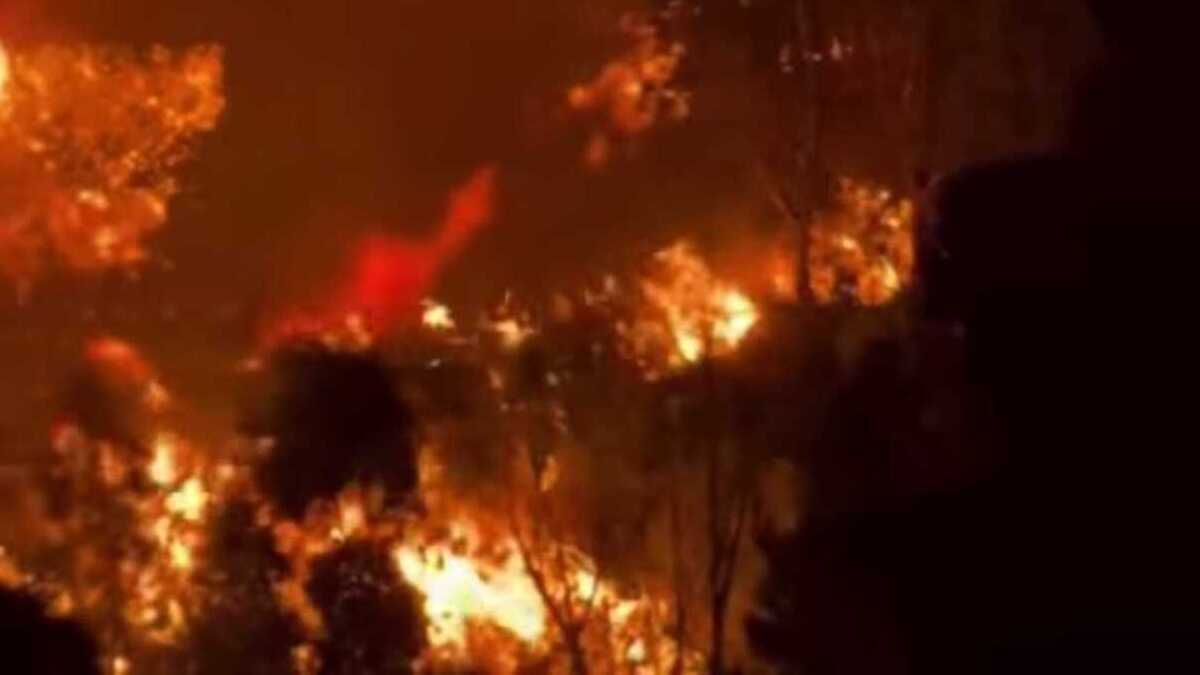
- More than 375,000 people have been displaced by major wildfires across France and Spain.
- France and Spain have deployed thousands of emergency personnel while receiving international firefighting assistance.
- Authorities warn prolonged drought and repeated heatwaves have created extreme wildfire conditions across southern Europe.

More than 325,000 people have been forced to flee their homes as some of the largest wildfires in recent years continue to burn across south-west France and central and eastern Spain, prompting mass evacuations, emergency government meetings and international firefighting assistance.
French President Emmanuel Macron was due to chair a crisis cabinet meeting on Monday as firefighters battled to contain rapidly spreading blazes threatening areas near Bordeaux. In Spain, Prime Minister Pedro Sánchez prepared to visit fire-stricken parts of the Valencia region after a new wildfire forced around 15,000 people to evacuate.
During a visit to Ávila province on Sunday, Sánchez warned that "difficult hours lie ahead", despite some improvements in weather conditions overnight.
Spain's Interior Minister Fernando Grande-Marlaska said the fires continued to spread, although at a slower pace than previously, while Civil Protection chief Virginia Barcones described the vast wildfire in Ávila as a "monster", with a perimeter stretching 280 kilometres and covering approximately 77,000 hectares.
Pope Leo XIV also appealed for prayers for those affected and for emergency workers responding to "the devastating fires that have struck several localities in France and Spain in recent days".
France battles massive wildfire near Bordeaux
The largest French wildfire has continued to rage across the Gironde department, where authorities said approximately 220,000 people have now been evacuated, making it one of the country's largest peacetime civilian evacuation operations.
The blaze, believed to have started accidentally near the village of Saumos on Wednesday, has burned around 42,000 hectares of forest—an area roughly seven times the size of Manhattan—and destroyed at least 240 homes.
Firefighters have been working to prevent the flames from reaching Bordeaux, the historic city at the centre of France's internationally renowned wine-producing region.
Bordeaux Mayor Thomas Cazenave said there were currently no plans to evacuate the city's population of around 270,000.
"We're very vigilant," he said. "The fire is further south. It is still on the edge of the metropolitan area, but it is not advancing on the western side of the metropolis."
He estimated that the fire remained between 25 and 30 kilometres from Bordeaux itself and about 15 kilometres from the metropolitan boundary near Martignas-sur-Jalle, whose 8,000 residents have been evacuated.
Authorities said villages around Bordeaux had been cleared as a precaution while emergency crews sought to prevent the fire from moving closer to the city.
Fire creates its own weather system
French firefighters said the Gironde blaze has generated an unprecedented pyrocumulonimbus, a massive cloud produced by intense heat that can generate its own powerful winds, lightning and additional fires.
The National Firefighters Federation described the phenomenon as significantly complicating firefighting efforts.
"It is a David-versus-Goliath scenario," federation spokesman Eric Brocardi said. "At some point, we'll find a weak spot and strike there."
Emergency responders also reported fire-generated whirlwinds and rapidly changing winds that made the blaze highly unpredictable.
"The wind is changing so much; it's really the fire calling the shots," one firefighter said.
Guillaume Millet of the Gironde Fire and Rescue Service told AFP that the fire's behaviour had become exceptionally difficult to predict.
"This is a fire that makes no sense. It has no direction. We can't predict it," he said.
The Gironde prefect urged tourists to avoid travelling to the region while emergency operations continued.
The fires have also forced the closure of 45 campsites, disrupting holidays for around 40,000 visitors. Holiday camps and Scout overnight trips have also been suspended.
France has deployed extensive resources to combat the fires, including hundreds of additional firefighters, around 100 firefighters from the Paris Fire Brigade, 500 soldiers and an Airbus A400M military transport aircraft adapted for aerial firefighting operations.
At least 84 French firefighters have been injured since the fires began.
Spain continues large-scale evacuations
Spain has also experienced widespread evacuations as multiple wildfires continue burning across the regions of Madrid, Ávila, Toledo, Castellón and Valencia.
Authorities said around 75,000 people had been evacuated from several regions, although updated figures released during the weekend indicated that well over 100,000 people had either been evacuated or ordered to remain indoors as conditions changed.
The most destructive fires remain concentrated west of Madrid and in neighbouring Ávila province, where nearly 77,000 hectares have already burned.
Spain's Environment Minister Sara Aagesen described the Ávila wildfire as "the largest forest fire in our country's recent history".
Spain's Interior Ministry has extended the national wildfire emergency to Toledo province, while the Military Emergencies Unit has established unified command structures to coordinate operations across the affected regions.
More than 2,600 firefighters, police officers and emergency personnel have been deployed, supported by 19 water-bombing aircraft and helicopters.
New wildfire forces evacuations in Valencia
While firefighters continued battling the large fires near Madrid, a new wildfire broke out in the Valencian Community near Vall d'Uixó in Castellón province.
Officials said the fire had expanded to a perimeter of approximately 21 kilometres, forcing around 16,000 residents either to evacuate or remain confined to their homes.
Regional officials described the blaze as "very intense".
Juanfran Pérez Llorca, president of the regional government, said the wildfire had exceeded local firefighting capacity.
"The fire is beyond our capacity to extinguish," he said.
Eight additional municipalities near Toledo were also evacuated as the emergency expanded.
Royal family visits evacuees
King Felipe VI and Queen Letizia visited an evacuation centre in Villamanta, west of Madrid, where they met residents displaced by the fires and thanked firefighters, military personnel and emergency workers.
The royal couple were accompanied by Lieutenant General Francisco Javier Marcos, head of Spain's Military Emergencies Unit, Madrid regional president Isabel Díaz Ayuso and Villamanta mayor Mariano Núñez.
King Felipe said the visit was intended to recognise those responding to the disaster.
"This is an example of what is being done in other places where people are fighting the fire. We want to show our affection, support and solidarity with everyone who has been through such a difficult time," he said.
He praised what he described as exemplary coordination between the Military Emergencies Unit, National Police, Guardia Civil and Civil Protection volunteers.
Queen Letizia said it was important to support those affected and to listen carefully to residents' experiences.
Arrest over alleged negligence
Spanish police have arrested a tractor driver suspected of causing one of the major wildfires west of Madrid.
The Guardia Civil said the fire allegedly began after agricultural machinery was used despite a ban on such activities during the period of extreme fire risk.
Another individual is also under investigation.
Authorities said prolonged drought and successive heatwaves had prompted restrictions on machinery capable of generating sparks.
The fire under investigation later merged with another major blaze west of Madrid, contributing to Spain's first national wildfire emergency.
Casualties and widespread disruption
The wildfires have caused fatalities in both countries.
Spain's Interior Ministry confirmed that one man was found dead inside a vehicle in the Valencian town of Manises after becoming trapped during a smaller wildfire.
In France, two firefighters were killed while responding to fires near Bordeaux.
Across both countries, hundreds of thousands of residents and holidaymakers have been displaced, with many spending nights in sports halls, exhibition centres and other emergency shelters.
In Bordeaux, the city's exhibition centre has been converted into a large temporary shelter.
"We were told: 'You have to evacuate'," said 70-year-old evacuee Frédéric Tavitian after arriving at the facility.
Some residents have chosen to remain behind.
In Le Barp, approximately 30 kilometres south of Bordeaux, former soldier Sébastien Piquet said his wife and son had evacuated while he stayed behind to help a relative who operates a kennel housing around 60 dogs should evacuation become necessary.
Italy also affected
Wildfires have also spread to parts of southern Italy.
Authorities evacuated more than 400 tourists and beachgoers by sea near Peschici in the Puglia region as firefighters tackled blazes threatening coastal areas.
European assistance continues
Spain has requested additional support through the European Union Civil Protection Mechanism.
Additional water-bombing aircraft from Italy and Greece are expected to reinforce aircraft already deployed from Portugal and the Netherlands.
Portugal, Greece and Italy have also contributed personnel and resources to assist firefighting operations.
Dry conditions intensify wildfire risk
Scientists have said repeated heatwaves and prolonged periods of below-average rainfall have left forests across southern Europe exceptionally dry, increasing the likelihood of large, fast-moving wildfires.
The current emergency follows one of Europe's hottest Junes on record and continues a severe wildfire season across the continent.
According to Spanish authorities, 32 major wildfires have already burned more than 152,000 hectares across the country in 2026, significantly exceeding the area affected during the same period last year.
Across France and Spain combined, approximately 375,000 people have now been displaced, making the ongoing crisis one of western Europe's largest wildfire emergencies in recent years.