Perry Warjiyo resigns as Bank Indonesia governor, Destry Damayanti assumes acting role
Indonesia has accepted Bank Indonesia Governor Perry Warjiyo's resignation nearly three years before the end of his second term, with Senior Deputy Governor Destry Damayanti assuming the role of Acting Governor pending the appointment of a permanent successor.
- Perry Warjiyo resigned nearly three years before completing his second term as Bank Indonesia governor.
- Destry Damayanti automatically became Acting Governor under the Bank Indonesia Act.
- Parliament now awaits President Prabowo Subianto's nominee for permanent appointment.

JAKARTA, INDONESIA — The Indonesian government has officially accepted the resignation of Bank Indonesia (BI) Governor Perry Warjiyo, ending his tenure nearly three years before the completion of his second five-year term.
Senior Deputy Governor Destry Damayanti has automatically assumed the role of Acting Governor in accordance with Indonesian law, while the government prepares the appointment process for a permanent successor.
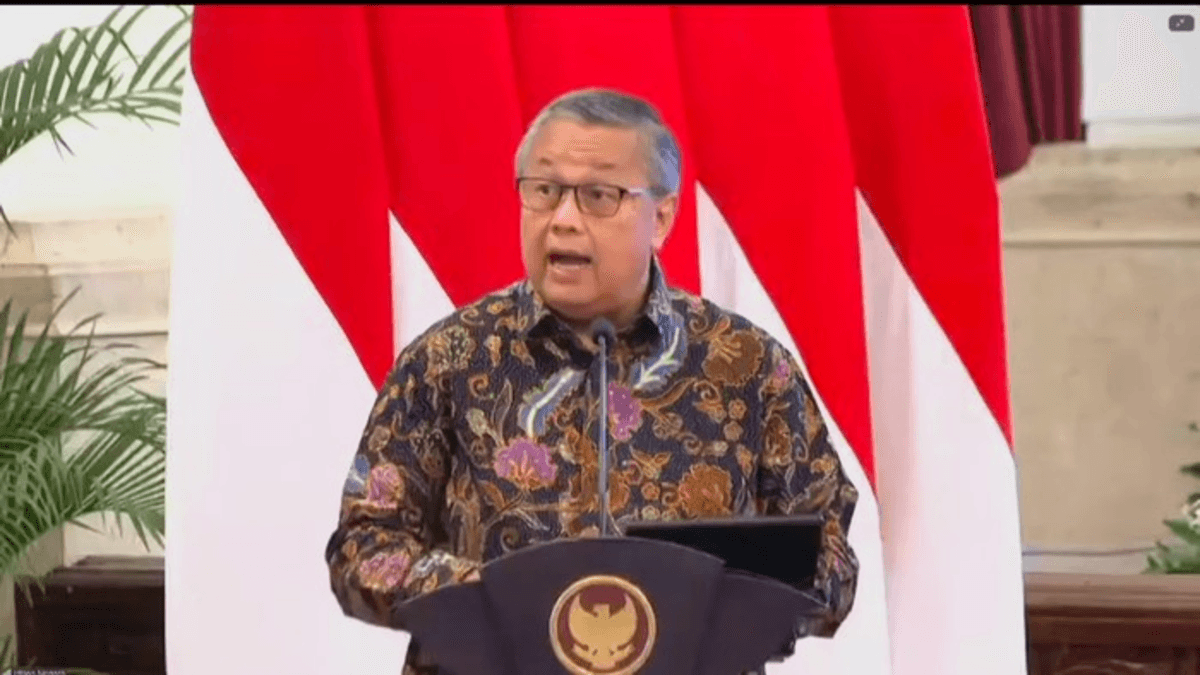
The announcement was made on Monday by Minister of State Secretary Prasetyo Hadi during a press conference at Bank Indonesia's headquarters in Jakarta.
President Prabowo Subianto accepted Perry's resignation after receiving a letter submitted on 25 July, citing personal reasons.
"The President has accepted Mr Perry Warjiyo's resignation while expressing his deepest appreciation and gratitude for his dedication during approximately seven years of leading Bank Indonesia," Prasetyo said.
The government said it would issue a Presidential Decree formally honouring Perry's dismissal from office.
Destry Damayanti assumes leadership
Prasetyo said that under the Bank Indonesia Act, the position of Governor is automatically assumed on an interim basis by the Senior Deputy Governor.
"According to the Bank Indonesia Act, the office of Governor will automatically be carried out by the Senior Deputy Governor, who will perform all the duties of Acting Governor. The Senior Deputy Governor is Ms Destry Damayanti," he said.
The government stressed that Bank Indonesia's operations would continue without interruption during the leadership transition.
Prasetyo said close coordination between the government and the central bank would continue in implementing national economic policy, while each institution maintained its legally mandated responsibilities.
"Bank Indonesia has the responsibility for maintaining monetary stability, while the government, through the Ministry of Finance, is responsible for fiscal policy, all within close coordination," he said.
Resignation comes before end of second term
Perry first became Governor of Bank Indonesia in 2019 after being nominated by then-President Joko Widodo and approved by the House of Representatives (DPR) through a parliamentary fit and proper test.
He was reappointed for a second term in 2024.
Under Indonesia's Bank Indonesia Act, the Governor serves a five-year term and may only be reappointed once. Perry's current term was scheduled to run until 2029.
His resignation therefore came nearly three years before the end of his mandate.
According to the government, Perry submitted his resignation letter on Sunday, and President Prabowo approved it after reviewing both the request and the legal mechanism governing succession at the central bank.
Destry Damayanti will serve as Acting Governor until parliament completes the statutory fit and proper test for a permanent appointment.
Palace declines to elaborate on reasons
During the press conference, Prasetyo declined to provide further details about Perry's decision.
Asked whether the governor had resigned because of illness, the minister said the government had no further information.
"We do not have those details," he said.
He also rejected suggestions that Perry had stepped down because of political pressure.
"Who is speculating? That is your question, which itself creates speculation," Prasetyo told reporters.
Prasetyo added that Perry had not met President Prabowo before submitting his resignation.
"There was no meeting. In his letter, he simply stated that he was resigning for personal reasons," he said.
Surprise announcement fuels public speculation
Perry's resignation surprised economists and financial observers, prompting widespread public discussion over the reasons behind his decision.
Hasril Hasan, an economist and banking analyst from UI Watch at the University of Indonesia, described the announcement as unexpected.
He noted that Perry had overseen the central bank for seven years, during which Bank Indonesia sought to maintain monetary stability despite recent pressure on the rupiah.
Hasril observed that the rupiah had weakened significantly since February, falling from around Rp15,600 to approximately Rp18,000 against the US dollar before partially recovering.
He said the central bank had spent substantial foreign exchange reserves while attempting to support the currency.
Hasril also noted that the government's announcement did not explain why Perry had chosen to resign before the completion of his term, leaving room for public speculation.
He added that Bank Indonesia's institutional independence should continue to be safeguarded regardless of the change in leadership.
Second governor to resign before completing term
Perry's resignation marks only the second occasion in Bank Indonesia's history that a governor has stepped down before completing a term of office.
The previous case occurred in 2009 when Boediono resigned after being nominated as the vice-presidential running mate of then-President Susilo Bambang Yudhoyono.
Unlike Boediono, whose resignation followed a clear constitutional process connected to his election candidacy, Perry cited only personal reasons.
Commentators have noted that previous governors remained in office during periods of severe economic turbulence, including the 1997 Asian financial crisis and Indonesia's political and economic crisis in the mid-1960s.
Parliament awaits presidential nominee
Attention has now shifted to the appointment of a permanent governor.
Commission XI of the House of Representatives, which oversees financial affairs, is awaiting a Presidential Letter nominating a candidate for the post.
Under Law No. 4 of 2023 on the Development and Strengthening of the Financial Sector (P2SK Law), the nominee must undergo a parliamentary fit and proper test before appointment.
Economist Bhima Yudhistira, Executive Director of the Centre of Economic and Law Studies (Celios), said the next governor should have a strong commitment to preserving the independence of the central bank.
He said the successful candidate should not be politically affiliated with the executive branch, should be capable of resisting political interference, and should prioritise monetary stability over expansionary policies that could undermine investor confidence.
Bhima also suggested that the government consider appointing a candidate from within Bank Indonesia.
Lawmakers emphasise continuity
Members of Commission XI said the transition process had been clearly regulated by law.
Deputy Commission Chairman Mohamad Hekal said Destry Damayanti possessed sufficient experience to lead the central bank during the interim period.
"Bank Indonesia's role in maintaining exchange rate and rupiah stability must be preserved. Ms Destry's appointment as Acting Governor is fully in accordance with the Bank Indonesia Act, and I am confident she is capable of carrying out the responsibility," he said.
Deputy Commission Chairman Dolfie Othniel Frederic Palit said the central bank would continue to be judged by the credibility and consistency of its monetary policy.
He said the institution's role in maintaining exchange rate stability and implementing monetary and macroprudential policy remained essential to supporting Indonesia's economic development.
Experienced central banker takes temporary charge
Destry has served as Senior Deputy Governor since 2019 and is currently in her second term, which runs until 2029.
Before joining Bank Indonesia's Board of Governors, she held senior positions at Citibank Indonesia, Mandiri Sekuritas, Bank Mandiri, the Ministry of State-Owned Enterprises and the Indonesia Deposit Insurance Corporation (LPS).
Economist Joshua said Destry's extensive experience in banking, financial markets and financial regulation positioned her well to oversee the transition without disrupting investor confidence.
He said her long-standing involvement in Bank Indonesia's work on money markets, foreign exchange policy and rupiah stability suggested that the central bank's overall policy approach would remain consistent during the interim period.
The process of appointing a permanent Governor now rests with President Prabowo Subianto, who will nominate a candidate before submitting the name to the House of Representatives for parliamentary confirmation.