SG Youth Plan launched, aiming to reach 500,000 young Singaporeans by 2030
President Tharman Shanmugaratnam and Acting Minister David Neo launched the SG Youth Plan on 25 July 2026, rolling out over 20 initiatives covering careers, housing and mental wellbeing for youths aged 15 to 35.
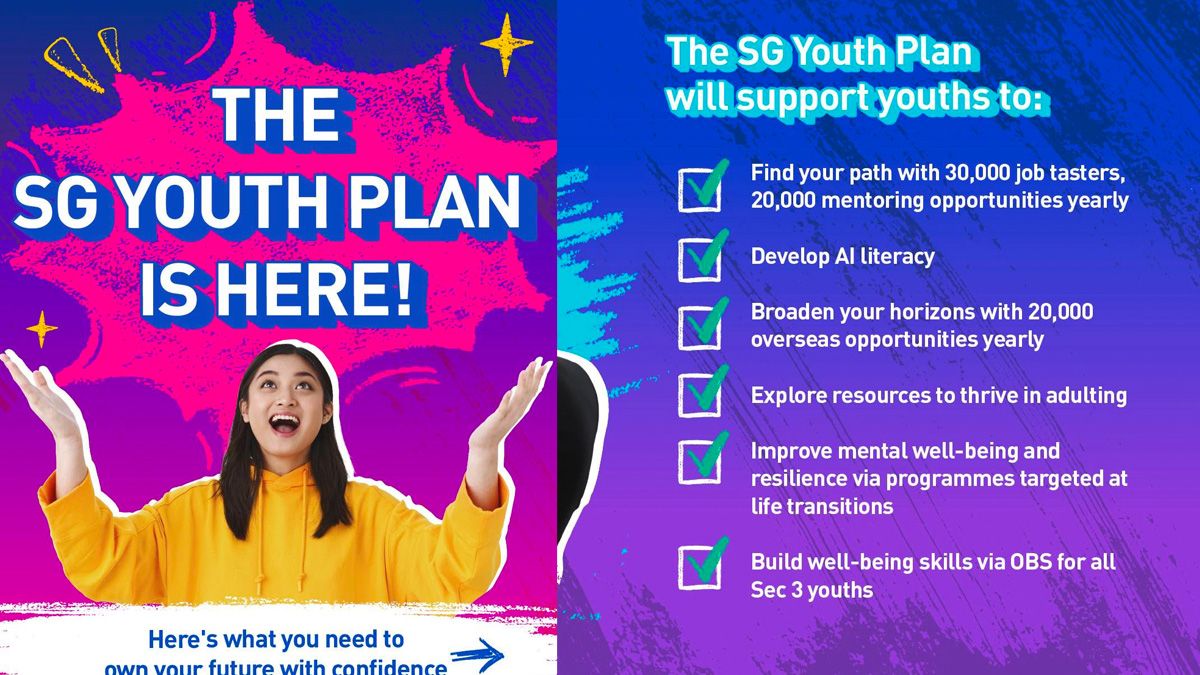
- SG Youth Plan targets 500,000 youths aged 15 to 35 over five years.
- Over 20 initiatives include job tasters, mentoring and independent living pilots.
- Survey of 60,000 youths found rising anxiety over careers, AI and mental health.

Singapore launched a new national youth development plan on Saturday, 25 July 2026, aiming to reach more than 500,000 young people over the next five years through more than 20 initiatives spanning careers, housing, mental wellbeing and civic participation.
The SG Youth Plan was unveiled by President Tharman Shanmugaratnam and Acting Minister for Culture, Community and Youth David Neo, who also serves as Senior Minister of State for Education, at the SG Youth Forum held at Suntec City Convention Centre.
The plan targets youths aged between 15 and 35 and was shaped by engagement with more than 60,000 young people between November 2024 and March 2026, according to the Ministry of Culture, Community and Youth (MCCY) and the National Youth Council (NYC). More than 415,000 responses were gathered through dialogues, roadshows and digital engagements involving participants from secondary schools, madrasahs and other institutions.
Survey findings released by MCCY and NYC showed 76 per cent of youths felt confident about Singapore's future, though only 66 per cent felt the same about their own prospects.
While 91 per cent aspired to meaningful careers, 52 per cent worried they lacked the skills to keep pace with a fast-changing economy, and about 40 per cent viewed artificial intelligence as a threat rather than an enabler. Around 30 per cent reported mental health concerns, and 8 per cent said they had no close friends.
Speaking to reporters ahead of the launch, Neo said the plan responded directly to what youths had shared about their fears and aspirations over an extended engagement period. He noted that global disruptions, from ongoing conflicts to supply chain pressures, had left some youths questioning whether they could afford the lifestyles their parents once had.
Career exploration and skills
A central plank of the plan is an expanded job tasting programme, offering up to 30,000 short-term placements annually by 2030, up from more than 10,000 planned for 2026. About 500 public sector tasters will be open to youths aged 15 and above, including those in junior colleges, polytechnics and the Institute of Technical Education.
Around 11,000 taster opportunities were offered last year across sectors including financial services, manufacturing, hospitality and information and communications, according to MCCY and NYC. Neo encouraged youths to use the scheme to explore industries facing manpower shortages that they might not otherwise have considered.
NYC will also work with partners to provide up to 20,000 mentoring opportunities, expanding the mentor pool from more than 1,000 to 5,000 by 2030. Separately, an Adulting 101 programme will launch in the second half of 2026 for students at institutes of higher learning, covering financial literacy, healthcare, home ownership, careers and relationships.
Housing, hobbies and social connection
Under an independent living pilot, private operators Coliwoo and Eco-Energy will offer more than 100 units at discounted rates across three properties in Jalan Besar, Boon Lay and Bukit Timah, for youths aged 21 to 35.
A Curiosity Credits scheme will provide S$500 (US$387) in credits to youths aged 13 to 17 supported by self-help groups such as Mendaki, to encourage them to pick up new hobbies and make friends outside school. MCCY said the initiative drew on a proposal raised by Jurong East–Bukit Batok GRC Member of Parliament David Hoe during a parliamentary debate in September 2025.
MCCY and NYC will also establish 12 new free "third spaces" across Singapore by the end of 2026, intended to give youths venues to gather and pursue shared interests.
Funding, volunteering and policy input
The NYC will commit up to S$20 million (US$15.5 million) from the National Youth Fund over five years to support up to 3,000 youth-led projects, combining year-round microgrants of S$1,000 with a twice-yearly Youth Action Marketplace for larger grants.
Youth Corps Singapore aims to raise volunteering opportunities from 10,000 to 16,000 annually by 2030, while lifting the volunteerism rate among school-going youths from two in five to one in two, and participation among young working adults from 14 per cent to 20 per cent.
For older youths seeking a policy voice, MCCY and NYC will convene further youth panels in the second half of 2026, building on a 2024 pilot covering financial resilience, careers, digital wellbeing, and environment and sustainability. A separate SG Youth Policy Network, comprising up to 80 members, is due to launch in the first quarter of 2027.
The 15-member Somerset Belt Youth CoLab, formed in April 2026 with a two-year term until 2028 and an annual budget of S$300,000, will continue shaping programming around the Somerset precinct.
To meet demand for overseas exposure, the Asia-Ready Exposure Programme will add 8,000 places by 2030, bringing total short-term overseas opportunities to 20,000, while overseas internship places in ASEAN countries, China and India are set to double to 3,000 annually from the current 1,500.
A new one-stop platform, the Discover portal, went live on 25 July to let youths sign up for initiatives under the plan.
Neo described the plan as "a living plan" that would be continually adjusted rather than reviewed only after a fixed term, citing the pace of technological and economic change. He said government's role was to provide resources and partnerships, while youths themselves would need to take up the opportunities on offer.